
English 
Room501, Building32, No. 518 Xinzhuan Highway, Songjiang District, Shanghai, China 201612
Views: 0 Author: Site Editor Publish Time: 2025-12-25 Origin: Site


Why does Nickel Alloy survive where most metals fail? Heat, corrosion, and extreme pressure destroy ordinary materials fast.
This article explains what a Nickel Alloy is and which alloying elements truly matter. You will see how these elements control strength, corrosion resistance, magnetism, and thermal stability.
Nickel Alloy is not a single metal grade or a fixed formula. It is a material system built on nickel as the primary base element, with carefully selected alloying elements added to control strength, heat resistance, corrosion behavior, magnetism, and long-term structural stability. From an engineering perspective, Nickel Alloy represents a controlled balance between chemistry, microstructure, and service performance. Once this fundamental logic is understood, material selection moves from trial-and-error into a predictable, data-driven process.
Unlike common construction metals, Nickel Alloy is designed for environments where temperature, pressure, corrosion, and long-term mechanical stress exist at the same time. This is why Nickel Alloy is widely used in aerospace turbines, chemical reactors, nuclear systems, marine equipment, and catalytic devices.

A Nickel Alloy is defined as a metallic material in which nickel serves as the dominant matrix metal, while other elements are dissolved into this matrix or form specific strengthening phases within it. This definition is not based solely on chemical composition but on structural dominance. In most recognized Nickel Alloys, nickel content typically exceeds 30% and in many cases reaches 50–75% or even higher.
This structure is fundamentally different from ordinary steels that only contain nickel as a minor alloying addition. In nickel-containing steels, iron remains the primary structural element, and nickel merely modifies toughness or low-temperature ductility. In true Nickel Alloys, nickel itself controls the crystal framework, corrosion behavior, thermal stability, and phase transformation rules.
This distinction is critical in industrial material selection. Engineers rely on true Nickel Alloys when operating conditions exceed the safe service limits of stainless steels and low-alloy steels. When nickel becomes the backbone rather than the modifier, the alloy enters an entirely different performance category.
Item | Nickel Alloy | Nickel Alloy Steel |
Base Metal | Nickel (Ni) | Iron (Fe) |
Typical Ni Content | 30%–75%+ | 1%–10% |
Structural Control | Nickel controls crystal structure | Iron controls structure |
Heat Resistance | Excellent | Moderate |
Corrosion Resistance | High | Medium |
Material Category | Nickel-based alloy | Alloy steel |
Nickel is selected as the base metal because of its exceptional atomic stability and adaptability. Its face-centered cubic crystal structure remains stable over a wide temperature range, allowing it to maintain both ductility and strength under conditions where many metals become brittle or unstable.
From a thermal perspective, nickel offers a high melting point near 1455°C and excellent resistance to oxidation at elevated temperatures. These qualities make it suitable for long-term exposure to heat without severe degradation. From a chemical perspective, nickel naturally resists corrosion in many neutral and alkaline environments, forming protective surface films that slow metal loss.
Perhaps most importantly, nickel forms wide solid solutions with many industrial elements including chromium, molybdenum, iron, cobalt, copper, and manganese. This means engineers can introduce multiple functional elements into the nickel lattice without destabilizing the overall structure. This flexibility allows Nickel Alloy to be precisely engineered for extreme conditions that carbon steel, alloy steel, and even conventional stainless steel cannot tolerate.
Pure nickel offers good corrosion resistance and electrical conductivity, but its mechanical strength is relatively limited. Under elevated temperature and sustained mechanical stress, pure nickel softens quickly and exhibits poor creep resistance. It can deform permanently even under moderate long-term loads.
Nickel Alloy resolves these weaknesses through controlled alloying. Solid-solution elements such as chromium, molybdenum, and cobalt strengthen the nickel lattice directly. Precipitation-hardening elements such as titanium, aluminum, and niobium create fine intermetallic particles during aging heat treatment. These particles lock the crystal structure in place and block dislocation movement.
As a result, Nickel Alloys maintain hardness, tensile strength, and dimensional stability in service conditions that would cause pure nickel to deform or fail. This is the primary reason Nickel Alloy is selected for gas turbines, high-pressure reactors, furnace components, and heat exchangers, where pure nickel simply cannot survive prolonged service.
Nickel Alloy Steel and Nickel Alloy share similar names but belong to fundamentally different material classes. In Nickel Alloy Steel, iron remains the structural base metal, and nickel is added primarily to improve toughness, impact resistance, and low-temperature performance. Typical nickel content in such steels ranges from 1% to 10%.
In contrast, Nickel Alloy is a nickel-based system in which nickel is the principal structural element. Iron may appear only as a secondary component or may be absent entirely. This structural dominance of nickel shifts the entire performance envelope of the material.
The difference becomes most visible at elevated temperature. Nickel Alloy Steel performs well under moderate heat and mechanical stress, but once service temperatures exceed roughly 500–600°C, its strength declines rapidly and creep deformation accelerates. Nickel Alloy continues to operate beyond this boundary with stable creep resistance, oxidation control, and microstructural integrity. This is why Nickel Alloy replaces steel once thermal and chemical conditions become too severe.
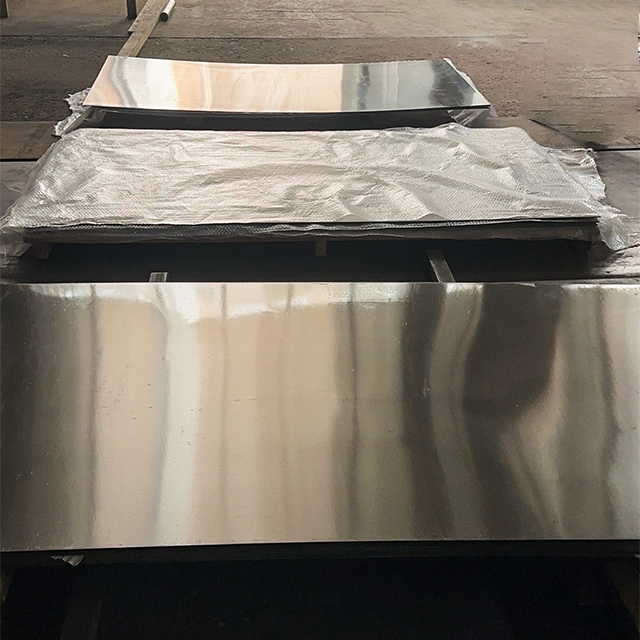
Not every Nickel Alloy qualifies as a superalloy. The term “superalloy” is reserved for high-performance Nickel Alloys that meet strict high-temperature mechanical and environmental requirements. These materials are designed to maintain load-bearing capacity above 700°C while resisting oxidation, thermal fatigue, and long-term creep deformation.
Superalloys rely primarily on precipitation hardening mechanisms. Titanium, aluminum, and niobium are dissolved into the nickel matrix during solution heat treatment. During subsequent aging, these elements form ultra-fine intermetallic precipitates that uniformly distribute throughout the microstructure. These precipitates lock the lattice in position, making deformation under heat extremely difficult.
Because of this internal reinforcement, nickel-based superalloys are used for turbine disks, combustion chambers, hot-end fasteners, and other components exposed to the highest thermal and mechanical stress in aircraft engines, industrial gas turbines, and power generation systems.
Nickel Alloy production follows a strictly controlled sequence of melting, alloying, casting, and either wrought processing or powder metallurgy. In most high-performance applications, vacuum melting is required. This process removes oxygen, sulfur, hydrogen, and other harmful gases that weaken grain boundaries and reduce fatigue life.
After melting, the alloy may be cast into ingots and hot-forged or hot-rolled to refine grain structure and eliminate internal porosity. For advanced applications, atomized powder is produced and used in hot isostatic pressing or additive manufacturing. Each processing route directly influences final grain size, phase distribution, and long-term mechanical reliability.
Microstructural control is just as important as chemical composition. Even a perfectly designed alloy chemistry can fail if melting, forging, or heat treatment is improperly executed.
All Nickel Alloys rely on two fundamental strengthening systems: solid-solution strengthening and precipitation (phase) strengthening. These systems often work together within the same alloy to deliver both short-term strength and long-term thermal stability.
Solid-solution strengthening occurs when elements such as chromium, molybdenum, iron, cobalt, and copper dissolve directly into the nickel lattice. Their presence distorts the crystal structure and increases resistance to plastic deformation. This raises base strength, improves corrosion resistance, and stabilizes performance at elevated temperatures.
Precipitation strengthening relies on controlled additions of titanium, aluminum, and niobium. These elements form ultra-fine intermetallic compounds during aging heat treatment. The precipitates act as internal anchors that prevent dislocation movement, sharply increasing yield strength, fatigue resistance, and creep life.
Trace elements also play a decisive role in Nickel Alloy performance. Even at levels below 0.05%, elements such as boron, magnesium, calcium, and rare earth metals improve grain boundary cohesion, suppress hot cracking during welding, and extend long-term service life under thermal cycling.
Each alloying element in a Nickel Alloy performs a specific mechanical or chemical function. Chromium forms stable oxide films on the surface and provides resistance to oxidation at high temperature. Molybdenum enhances resistance to pitting corrosion and protects against reducing acids. Iron lowers material cost while maintaining a balance between strength and ductility. Copper improves stability in seawater and alkaline environments. Cobalt stabilizes creep resistance at extreme temperatures.
Titanium, aluminum, and niobium form the precipitation hardening system responsible for high-temperature load capacity. Boron and rare earth elements reinforce grain boundaries and suppress creep rupture. Every commercial Nickel Alloy grade is essentially a unique engineered combination of these elemental functions tailored for a specific working environment.
Alloying elements directly reshape every key property of Nickel Alloy. Strength and hardness increase through solid-solution effects and rise sharply after precipitation aging. High-temperature creep resistance improves as atomic diffusion slows and dislocation motion is restricted by precipitates and solute atoms.
Corrosion performance depends strongly on the type of chemical environment. Chromium protects against oxidizing acids and hot gases. Molybdenum defends against reducing acids such as hydrochloric acid. Copper stabilizes performance in seawater and alkaline solutions. Without these specific elements, nickel alone cannot resist all industrial chemical environments.
Magnetic behavior also varies with composition. Nickel-iron systems tend to be magnetic and are used in precision instruments and sensors. Nickel-chromium systems are typically non-magnetic and are preferred in aerospace and electrical heating applications. Electrical and thermal conductivity generally decrease as alloy complexity increases, which directly influences heating element design, thermocouple behavior, and thermal management.
Nickel-Chromium Alloys, represented by the Inconel family, dominate high-temperature aerospace and furnace applications due to their exceptional oxidation resistance and hot strength. Nickel-Copper Alloys, represented by Monel, excel in marine and alkaline environments with excellent resistance to seawater corrosion. Nickel-Molybdenum Alloys, such as Hastelloy, resist highly aggressive chemical media where stainless steels fail.
Nickel-Iron Alloys such as Invar exhibit ultra-low thermal expansion and are used in precision measuring instruments and aerospace control systems. Nickel-Titanium Alloys, known as Nitinol, demonstrate shape memory and superelastic behavior and serve as functional materials in medical implants and mechanical actuators.
In aerospace turbines and combustion chambers, chromium controls oxidation, cobalt stabilizes creep strength, and titanium, aluminum, and niobium deliver precipitation hardening. These elements allow components to operate near 1000°C under continuous mechanical load.
In chemical reactors and acid processing systems, molybdenum and chromium define corrosion survival. In nuclear power heat exchange and cleaning equipment, impurity control and grain stability become more critical than raw strength. Radiation resistance, weld integrity, and long-term microstructural stability dominate material selection.
Marine pumps, valves, and pipelines rely on nickel and copper for decades-long resistance to chloride attack and biofouling. In automation and catalytic systems, nickel governs surface reactivity while rare earth elements stabilize microstructure under continuous thermal exposure.
Application Environment | Key Alloying Elements | Typical Alloy System |
Aerospace Turbines | Cr, Co, Ti, Al, Nb | Nickel-Chromium Superalloy |
Chemical Reactors | Mo, Cr | Nickel-Molybdenum Alloy |
Nuclear Heat Exchange | Low impurities, REEs | High-purity Nickel Alloy |
Marine Systems | Cu, Ni | Nickel-Copper Alloy |
Precision Instruments | Fe, Ni | Nickel-Iron Alloy |
Medical Devices | Ni, Ti | Nickel-Titanium Alloy |
Nickel Alloy is not a single metal, but a controlled elemental system. Alloying elements directly drive corrosion resistance, high-temperature strength, magnetic behavior, and service life.
Correct alloy design prevents failure, improves safety, and controls cost. Understanding Nickel Alloy and its alloying elements is the foundation of high-performance material selection. Shanghai Bozhong Metal Group Co., Ltd. provides reliable Nickel Alloy products that deliver stable quality and real engineering value.
A: Nickel Alloy is a nickel-based metal system designed for strength and corrosion resistance.
A: In Nickel Alloy, chromium, molybdenum, titanium, and niobium control strength and corrosion.
A: Nickel Alloy resists high heat, pressure, and chemical attack better than steel.
A: Nickel Alloy uses nickel as the base, while Nickel Alloy Steel is iron-based.
A: Nickel Alloy costs more due to high nickel content and complex processing.
A: Poor alloying leads to corrosion, creep failure, and reduced service life.


