
English 
Room501, Building32, No. 518 Xinzhuan Highway, Songjiang District, Shanghai, China 201612
Views: 0 Author: Site Editor Publish Time: 2025-12-18 Origin: Site


Which Nickel Alloy truly performs better under extreme pressure and heat? Inconel 718 and Inconel X-750 are two widely used precipitation-hardened superalloys.
This comparison focuses on strength, temperature stability, corrosion resistance, and cost. In this article, you will learn how engineers and buyers choose between them.
When selecting a Nickel Alloy for critical components, engineers usually face one core decision: should the design prioritize maximum mechanical strength or long-term thermal endurance? This question directly separates the ideal application fields of Inconel 718 and Inconel X-750. Although both belong to precipitation-hardened nickel-based superalloys, their performance focus differs clearly in extreme service environments.
At both room temperature and elevated temperatures, Inconel 718 consistently delivers higher yield strength and tensile strength than Inconel X-750. Typical tensile strength of 718 reaches approximately 1270–1370 MPa, while X-750 usually remains in the 900–1100 MPa range (data requires verification based on heat treatment condition). Yield strength follows the same trend.
This strength advantage allows 718 to dominate structural load-bearing applications, such as turbine disks, aerospace frames, pressure housings, and rotating shafts. It resists permanent deformation more effectively under heavy static and dynamic loads, even after welding and long-term service. For components where safety margins depend directly on mechanical strength, 718 is generally the default Nickel Alloy choice.
Table 1. High-Temperature Strength Comparison (Typical Values)
Nickel Alloy | Tensile Strength (MPa) | Yield Strength (MPa) | Typical Application Role |
Inconel 718 | 1270–1370 | 1000–1100 | Turbine disks, frames, pressure parts |
Inconel X-750 | 900–1100 | 700–850 | Springs, retainers, thermal parts |
When components operate for thousands of hours at elevated temperatures, creep resistance becomes more critical than short-term strength. In this category, Inconel X-750 holds a clear advantage. The difference originates from their strengthening mechanisms. Inconel 718 relies mainly on gamma double-prime (γ″) precipitation, while X-750 is strengthened primarily by gamma-prime (γ′) precipitation.
Gamma-prime phases exhibit superior thermal stability at very high temperatures and resist dislocation movement more effectively over long exposure times. This is why X-750 performs better in springs, fasteners, retaining rings, and nuclear reactor components, where constant stress is combined with extreme heat. In contrast, although 718 performs very well below its thermal ceiling, its creep resistance declines more rapidly beyond its optimal temperature range.
Table 2. Strengthening Mechanism and Creep Behavior
Nickel Alloy | Main Precipitation Phase | Creep Resistance | Typical Long-Term Use |
Inconel 718 | Gamma Double-Prime (γ″) | Moderate | Structural high-load parts |
Inconel X-750 | Gamma Prime (γ′) | Excellent | Springs, fasteners, nuclear hardware |
Each Nickel Alloy has a practical upper service temperature beyond which mechanical reliability starts to degrade. Inconel 718 is typically limited to about 700°C, while Inconel X-750 can remain stable up to approximately 980°C. Above this threshold, 718 experiences accelerated microstructural coarsening and loss of strength, while X-750 maintains dimensional stability and creep resistance for much longer periods.
This temperature gap explains why X-750 is frequently selected for gas turbine hot-section hardware, furnace fixtures, and nuclear reactor internals, where continuous exposure near 900–980°C is common. When the operating temperature remains well below 700°C, however, the strength and corrosion advantages of 718 usually outweigh the thermal ceiling of X-750.
Most industrial systems operate under cyclic thermal and mechanical loading, such as aircraft engines during takeoff and landing or power generation systems during daily start–stop cycles. These conditions promote thermal fatigue, which gradually leads to crack initiation and growth.
In these scenarios, Inconel 718 performs better under cyclic mechanical stress due to its higher yield strength, while Inconel X-750 performs better under long-term thermal cycling because of its creep stability. As a result, modern turbine engines commonly use 718 for disks and load-bearing shafts, while X-750 is applied in springs, seals, and expansion-control components. Both alloys often coexist within the same system to balance strength and thermal endurance.
Oxidation resistance in Nickel Alloy systems depends strongly on chromium content and oxide film stability. Inconel 718 typically contains 17–21% chromium, while X-750 contains 14–17% chromium. The higher chromium level in 718 improves formation of a protective oxide layer and enhances oxidation resistance in many service environments.
However, Inconel X-750 still performs better in continuous hot-air exposure at very high temperatures, where its gamma-prime-stabilized microstructure maintains oxide adhesion and limits spallation. This makes X-750 particularly suitable for combustion fixtures, furnace hardware, and reactor atmospheres, where uninterrupted heat exposure dominates over corrosive liquid environments.
From a performance perspective, Inconel 718 should be selected when mechanical load, corrosion resistance, and weldability dominate the design criteria. It performs exceptionally well in pressure vessels, rotating components, offshore structures, and aerospace frame systems. Inconel X-750 should be selected when thermal endurance, creep resistance, and dimensional stability at extreme temperature dominate, such as in turbine springs, sealing systems, and nuclear components. The final decision must balance load level, service temperature, corrosion exposure, fabrication method, and expected service life.
The mechanical behavior of each Nickel Alloy originates directly from its chemical composition and precipitation system. Small changes in alloying elements produce large differences in service performance.
Inconel 718 typically contains 50–55% nickel, with iron making up a significant portion of the balance. In contrast, Inconel X-750 contains at least 70% nickel, with only a small percentage of iron. The higher nickel content of X-750 improves high-temperature stability and creep behavior but raises raw material cost. The higher iron content of 718 reduces cost while maintaining strong mechanical performance, which supports its widespread industrial adoption.
Table 3. Key Chemical Composition Differences
Element | Inconel 718 | Inconel X-750 | Performance Impact |
Nickel (Ni) | 50–55% | ≥70% | High-temperature stability |
Chromium (Cr) | 17–21% | 14–17% | Oxidation and corrosion resistance |
Iron (Fe) | Balance | Low | Cost control vs heat stability |
Molybdenum (Mo) | Yes | No | Acid and chloride corrosion resistance |
Niobium (Nb) | Yes | No | High strength |
Aluminum + Titanium | Low | High | Creep and thermal stability |
Inconel 718 gains its strength from a dual strengthening system. Niobium (Nb) forms strengthening precipitates that resist plastic deformation, while molybdenum (Mo) enhances solid-solution strengthening and corrosion resistance. This combined mechanism produces high yield strength, excellent weldability, and strong resistance against chloride-induced corrosion, making 718 highly versatile across aerospace, offshore, and chemical industries.
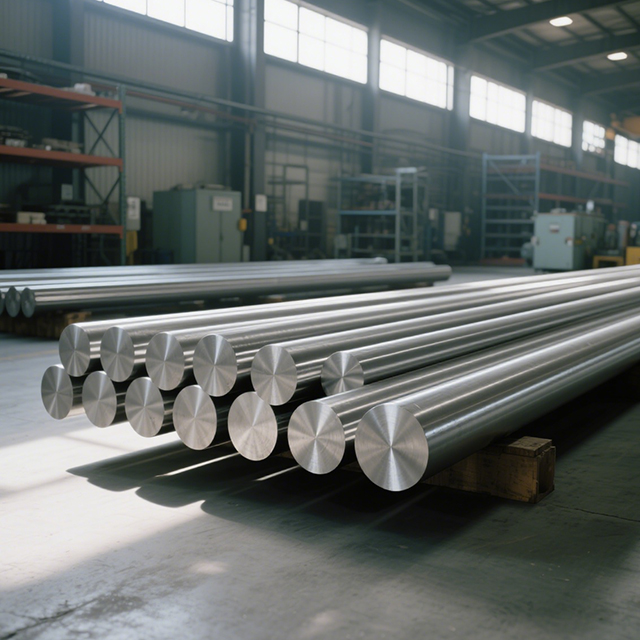
Inconel X-750 relies mainly on aluminum and titanium to form gamma-prime precipitates. These phases remain stable at extreme temperatures and strongly resist creep deformation and stress rupture. As a result, X-750 excels in long-term high-temperature applications such as springs, retainers, fasteners, and nuclear reactor hardware, particularly after proper aging heat treatment.
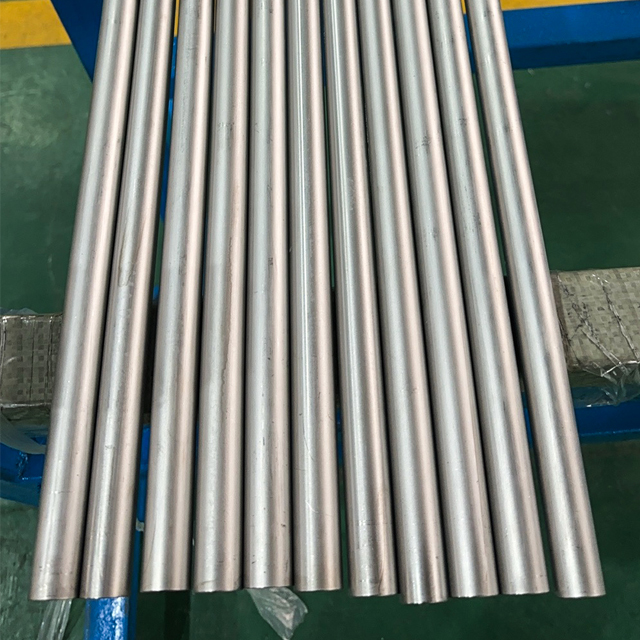
Corrosion resistance directly influences service life in aggressive industrial environments.
The higher chromium content of Inconel 718 provides stronger protection against oxidation, pitting, and crevice corrosion, especially in environments involving moisture, chemical vapor, or seawater spray. This gives 718 a clear advantage in offshore structures, marine hardware, and chemical processing equipment.
Inconel 718 contains significant molybdenum, which dramatically enhances resistance to chloride attack, acidic solutions, and crevice corrosion. This makes it especially suitable for subsea systems, offshore valves, and oilfield wellhead equipment. Inconel X-750 lacks comparable molybdenum content, which limits its resistance in strongly reducing environments.
Stress corrosion cracking occurs under the combined influence of tensile stress, corrosive medium, and elevated temperature. Due to its molybdenum content and stable microstructure, Inconel 718 shows better long-term resistance to stress corrosion cracking, particularly in chloride-rich environments found in marine and oilfield systems. X-750 performs well in hot, dry air but is less resistant under wet corrosive conditions.
Manufacturing behavior strongly affects total project cost and delivery risk.
Inconel 718 is widely recognized as one of the most weldable Nickel Alloys. It shows low sensitivity to hot cracking and maintains stable mechanical properties after post-weld aging. This makes it ideal for complex welded pressure structures. In contrast, Inconel X-750 shows higher cracking sensitivity, requires stricter heat input control, and is less tolerant of welding errors.
Both alloys are difficult to machine. Inconel 718 exhibits strong work hardening, which increases cutting force and tool wear. Inconel X-750 generates higher cutting heat and faster tool oxidation, especially at high speeds. Controlled feeds, sharp tooling, and effective cooling are essential for both materials.
Physical properties influence weight, thermal processing windows, and forming behavior.
Inconel 718 has a density of approximately 8.19 g/cm³, while Inconel X-750 is slightly denser at 8.28 g/cm³. Although the numerical difference seems small, weight reduction becomes significant in large rotating systems and aerospace structures where mass directly affects efficiency.
Inconel 718 melts in the range of 1260–1336°C, while X-750 melts at 1390–1430°C. The higher melting range of X-750 allows higher forging and solution heat treatment temperatures, supporting extreme thermal processing routes that are sometimes required for heavy nuclear and turbine hardware.
Each alloy has formed its role through decades of proven industrial performance.
Inconel 718 dominates structural aerospace components, including turbine disks, engine frames, shafts, and pressure housings. Inconel X-750 dominates thermal fatigue components, such as springs, seals, and retaining rings. Modern jet engines often contain both alloys working together in complementary roles.
Because of its superior corrosion and stress cracking resistance, Inconel 718 is the preferred choice in offshore and subsea systems, including valves, connectors, and high-pressure piping. X-750 appears far less frequently in these wet corrosive environments.
Inconel X-750 dominates in nuclear reactor springs, control rod hardware, and high-temperature fasteners, where creep resistance is critical. Inconel 718 dominates in turbine shafts, pressure casings, and load-bearing frames, where strength and weldability are essential.
Material selection must also consider procurement stability and long-term cost risk.
Inconel X-750 contains significantly more nickel, making it more sensitive to nickel market price fluctuations. Inconel 718 contains more iron, which lowers raw material cost and offsets its superior mechanical and corrosion performance. As a result, 718 often achieves near price parity with X-750 despite offering broader performance advantages.
Inconel 718 is one of the most widely produced Nickel Alloy grades worldwide, with strong mill capacity across bars, pipes, plates, and forgings. Lead times are generally stable. Inconel X-750 is produced in lower volume, which increases lead time sensitivity during aerospace or nuclear demand surges.
Inconel 718 suits projects needing high strength, corrosion resistance, and reliable welding. It works well in offshore and aerospace structures. Inconel X-750 fits extreme heat, long-term creep, and nuclear hardware needs. Shanghai Bozhong Metal Group Co., Ltd. provides high-quality Nickel Alloy products with stable supply and strong technical support.
A: Nickel Alloy 718 focuses on strength; X-750 focuses on extreme heat endurance.
A: Nickel Alloy X-750 is preferred for springs due to superior creep resistance.
A: It offers higher strength, better corrosion resistance, and excellent weldability.
A: Nickel Alloy 718 suits up to 700°C, while X-750 withstands near 980°C.
A: No, 718 often matches X-750 in price due to lower nickel content.
A: Nickel Alloy 718 is easier to weld and more stable after heat treatment.


