
English 
Room501, Building32, No. 518 Xinzhuan Highway, Songjiang District, Shanghai, China 201612
Views: 0 Author: Site Editor Publish Time: 2026-10-22 Origin: Site


Material failure in high-stress, corrosive, or extreme-temperature environments leads to catastrophic downtime and severe safety liabilities. Engineers and procurement teams must specify the correct nickel-based alloy to ensure component longevity. However, overlapping baseline properties between superalloys often create specification ambiguity and risk of project delays. Selecting the wrong material compromises entire systems under pressure. You need precise technical data to make informed metallurgical choices. This guide provides a technical evaluation of inconel vs monel, comparing their metallurgical properties and fabrication realities to help you specify the exact material required for your application.
Compositional Baseline: Inconel is a nickel-chromium-based superalloy designed for extreme heat and oxidation resistance, whereas Monel is a nickel-copper alloy optimized for highly corrosive, reducing environments.
Thermal vs. Chemical Dominance: Specify Inconel for high-temperature mechanical stability (e.g., gas turbines, exhaust systems); specify Monel for ambient-to-moderate temperature chemical resistance (e.g., marine environments, hydrofluoric acid processing).
Fabrication Realities: Monel offers superior processing performance and moderate cutting difficulty. Inconel is notorious for rapid work-hardening, requiring specialized tooling, slower feed rates, and significantly higher machining costs.
Cost Implications: Inconel generally commands a higher raw material and processing cost due to its complex alloying elements (Chromium, Molybdenum). Over-specifying Inconel when Monel meets the environmental criteria leads to unnecessary project bloat.
Table of Contents
Inconel and Monel are nickel-based alloy families with different chemical compositions and performance characteristics. Inconel generally emphasizes high-temperature performance and corrosion resistance, while Monel is particularly valued for its resistance to seawater and selected chemical environments.
Inconel alloys primarily contain nickel and chromium, with additional elements such as molybdenum, niobium, aluminum, or titanium in certain grades. These elements improve oxidation resistance, mechanical strength, and corrosion performance. For example, Inconel 718 uses precipitation hardening to achieve high strength for aerospace and industrial applications.
Monel alloys are primarily composed of nickel and copper, providing excellent resistance to seawater and selected reducing chemical environments. Monel 400 offers good corrosion resistance and ductility, while Monel K-500 provides higher strength through precipitation hardening. Explore our Monel Alloy range for available grades and product forms.
Incoloy alloys generally contain more iron than Inconel or Monel and are used in applications requiring a balance of corrosion resistance, thermal performance, and cost. Their suitability depends on the specific grade. For industrial heating and chemical processing applications, explore our Incoloy Alloy products.
Selecting between Inconel and Monel requires comparing operating temperature, chemical exposure, mechanical strength, and the intended application.

Inconel alloys are widely used in high-temperature applications because selected grades offer excellent oxidation resistance and retain useful mechanical properties under thermal stress. Monel alloys are generally more suitable for moderate-temperature applications where corrosion resistance is important. Maximum service temperature should be determined from the specific grade, mechanical load, and exposure conditions.
Inconel and Monel offer different corrosion resistance profiles. Inconel grades containing chromium and molybdenum can provide strong resistance to oxidation and selected localized corrosion conditions. Monel alloys perform well in seawater and certain reducing environments, including suitable hydrofluoric acid applications. Actual resistance depends on chemical concentration, temperature, and operating conditions.
For demanding marine and chemical applications, Inconel 625 Alloy provides another material option where corrosion resistance and mechanical strength are both important.
Mechanical strength varies significantly between alloy grades. Precipitation-hardened Inconel 718 provides high strength for demanding structural components, while Monel 400 offers good ductility and corrosion resistance. Monel K-500 combines nickel-copper corrosion resistance with increased strength through aluminum and titanium additions, making it suitable for selected marine shafts, fasteners, and pump components.
Property | Inconel | Monel |
|---|---|---|
Main Composition | Nickel-Chromium | Nickel-Copper |
Key Advantage | High-temperature and corrosion performance | Marine and selected chemical resistance |
High-Temperature Applications | Common in suitable grades | More grade-dependent and generally limited |
Corrosion Resistance | Oxidizing and selected aggressive environments | Seawater and selected reducing environments |
High-Strength Grades | Inconel 718 | Monel K-500 |
Common Applications | Aerospace, turbines, chemical processing | Marine equipment, pumps, valves |
Note: Properties vary by alloy grade, product condition, and service environment. Final material selection should follow the relevant technical specifications.
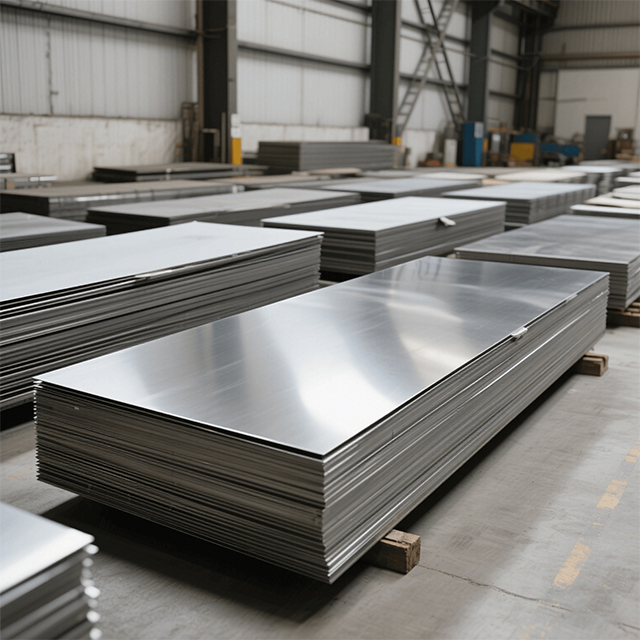
Inconel and Monel alloys require different machining approaches. Inconel grades often exhibit significant work hardening and tool wear, making rigid equipment, suitable carbide tooling, and effective cooling important. Monel alloys can also work-harden, but machining characteristics vary by grade and condition. Selecting suitable cutting parameters helps improve surface quality and production efficiency.
Inconel and Monel alloys can be welded and formed using appropriate procedures. Welding requires clean surfaces, compatible filler metals, and controlled heat input, while bending and forming depend on material strength and ductility. Some grades may require intermediate annealing or additional heat treatment. Fabrication requirements should follow the specific alloy grade and applicable welding standards.
Fabrication Factor | Inconel | Monel |
|---|---|---|
Machinability | Often challenging due to work hardening | Grade-dependent; can also be challenging |
Tooling | Suitable carbide or specialized tools | Carbide or suitable high-speed steel tools |
Work Hardening | Significant in many grades | Present in many grades |
Welding | Grade-specific filler metals and procedures | Grade-specific filler metals and procedures |
Forming | May require higher forming forces | Depends on grade and material condition |
Heat Treatment | Depends on alloy and required properties | Depends on alloy and required properties |
Inconel alloys are commonly selected for applications requiring high-temperature strength, oxidation resistance, or corrosion resistance. Typical uses include aerospace components, industrial furnaces, chemical processing equipment, and high-pressure systems. Grade selection is important: Inconel 600 Alloy is relevant to industrial heating applications, while Inconel 625 Alloy is widely considered for marine and chemical processing equipment.
Monel alloys are valued for their resistance to seawater and selected corrosive chemicals. Common applications include marine pumps, valves, shafts, heat exchangers, and chemical processing equipment. Monel 400 is often used for corrosion-resistant components, while Monel K-500 provides additional strength for suitable mechanical applications. Explore our Monel Alloy range for available grades and product forms.
Nickel alloy selection should begin with clearly defined operating requirements. Evaluate maximum temperature, chemical exposure, pressure, mechanical loads, and expected service life. The selected alloy must provide suitable performance under actual operating conditions rather than simply offering the highest nominal material properties.
Manufacturing requirements can influence material selection and total project cost. Before choosing an alloy, confirm that the fabrication supplier can meet machining tolerances, welding specifications, forming requirements, and production schedules. Complex components may require specialized tooling or qualified welding procedures.
A structured material qualification process helps reduce specification errors and production risks. Engineers should verify the operating environment, compare grade-specific properties, evaluate fabrication feasibility, and review available material certification before approving the final alloy.
Nickel alloy procurement should follow the relevant ASTM, ASME, or application-specific requirements. Buyers should confirm the correct UNS grade, product form, mechanical properties, and Material Test Reports (MTRs). For sour-service applications, applicable NACE MR0175/ISO 15156 requirements should also be reviewed.
Evaluation Item | Key Question |
|---|---|
Operating Temperature | Can the alloy meet the required temperature and load conditions? |
Corrosion Resistance | Is it compatible with the process chemicals and concentrations? |
Mechanical Strength | Does it meet pressure, fatigue, and strength requirements? |
Machinability | Can the supplier manufacture the required component? |
Welding and Forming | Are suitable procedures and consumables available? |
Certification | Does the material meet the required standards and traceability requirements? |
A: No. Chromium-based superalloys generally possess higher tensile and yield strength. This is especially true at elevated temperatures. Their superalloy classification and precipitation hardening capabilities give them superior mechanical properties under extreme stress. The copper-nickel alternative provides moderate strength but excels primarily in chemical resistance rather than pure mechanical yield.
A: All three are high-performance nickel-based alloys. The chromium-rich superalloy uses a nickel-chromium base for extreme heat. The copper-nickel alloy uses a nickel-copper base for reducing corrosives. Incoloy features a nickel-iron-chromium blend. It offers a reliable middle ground for moderate high-temperature applications where extreme superalloys are unnecessary.
A: Yes, you can perform dissimilar metal welding between these two distinct alloys. You must use specific nickel-based filler metals, typically an ERNiCrMo-3 or similar grade. Controlling heat input is absolutely critical to prevent cracking. You must ensure a structurally sound joint by following strict interpass temperature guidelines and ensuring absolute surface cleanliness.
A: The material experiences rapid and severe work-hardening during cutting operations. As the cutting tool strikes the metal, the surface hardens immediately. This requires highly rigid machine setups, specialized carbide or ceramic tooling, and continuous cutting. If the tool rubs without cutting, it glazes the surface and breaks the insert instantly.
A: Grade 400 is marginally magnetic at room temperature. This characteristic can be a critical factor in sensitive electronic equipment or logging-while-drilling applications. In contrast, chromium-heavy superalloys are generally non-magnetic. You must test the specific heat lot if magnetic permeability is a strict requirement for your design.
A: The copper-nickel alloy remains the absolute industry standard for flowing seawater and marine environments. Its specific composition provides exceptional, targeted resistance to salt-induced corrosion and biofouling. It performs reliably in submerged offshore applications, pump shafts, and desalination plants where oxidation is not the primary threat.
A: Common superalloy grades include 625 and 718. They are known for extreme heat resistance and high mechanical strength. Common copper-nickel grades include 400 and K-500. Grade K-500 adds titanium and aluminum to the matrix. This addition allows for precipitation hardening, significantly increasing its baseline strength.


