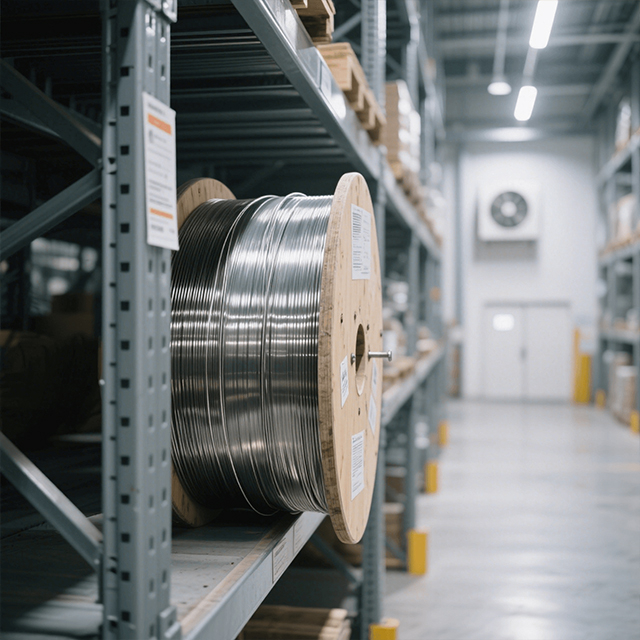
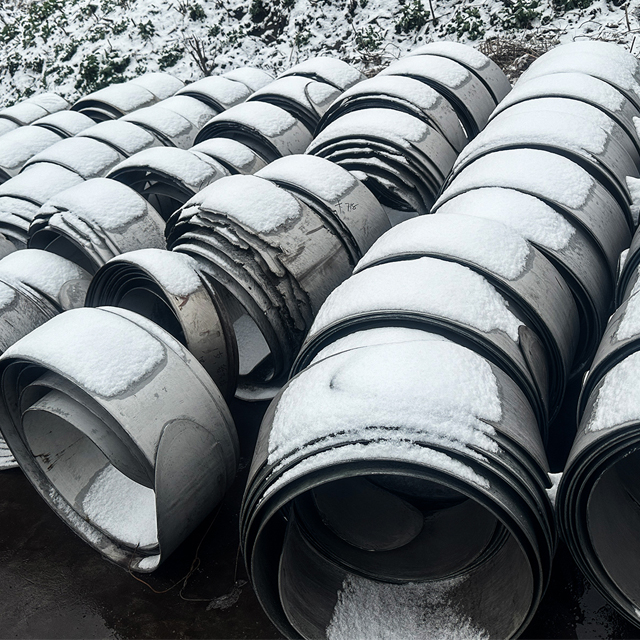
Detailed Introduction to Inconel 690 High-Temperature Alloy Material
Inconel 690 is a nickel-chromium alloy with excellent corrosion resistance, particularly in high-temperature and high-pressure water environments. It is widely recognized for its superior performance in nuclear applications and other harsh industrial settings, making it a critical material in various demanding fields.
Chemical Composition
The chemical composition of Inconel 690 is carefully formulated to ensure its outstanding properties, with the main components and their content ranges as follows:
Ni | Cr | Fe | C | Si | Mn | S | Cu | Al | Ti |
58.0% - 63.0% | 27.0% - 31.0% | 7.0% - 11.0% | ≤0.05% | ≤0.5% | ≤0.5% | ≤0.015% | ≤0.5% | ≤0.3% | ≤0.3% |
Physical Properties
Density: Approximately 8.19 g/cm³, providing a stable structure for heavy-duty applications.
Melting Point: Ranges from 1343°C to 1371°C, ensuring reliable performance in high-temperature conditions.
Thermal Expansion Coefficient: About 13.1×10⁻⁶/°C (20 - 100°C), 16.0×10⁻⁶/°C (20 - 500°C), minimizing thermal stress during temperature changes.
Thermal Conductivity: Around 15.1 W/(m·K) at 20°C, 21.0 W/(m·K) at 500°C, facilitating efficient heat transfer.
Electrical Resistivity: Approximately 1.18 μΩ·m at 20°C, 1.30 μΩ·m at 500°C, suitable for specific electrical applications.
Magnetism: Non-magnetic, making it ideal for environments sensitive to magnetic interference.
Elastic Modulus: About 206 GPa at 20°C, 180 GPa at 500°C, offering good rigidity and resistance to deformation under mechanical loads.
Designations and Standards
United States: UNS N06690, specified in ASTM standards such as ASTM B166 (rod and bar), ASTM B168 (sheet, plate, and strip), and ASTM B167 (seamless pipe and tube). It is also covered by AMS specifications like AMS 5541 for aerospace and nuclear applications.
Germany: Werkstoff Nr. 2.4642, compliant with DIN standards including DIN 17742 and DIN 17750, ensuring quality and consistency in industrial use.
Other Regions: Corresponding designations exist in Japanese (e.g., NCF 690-like), French, and British standards, maintaining consistent performance across global industries with minor variations in specific requirements.