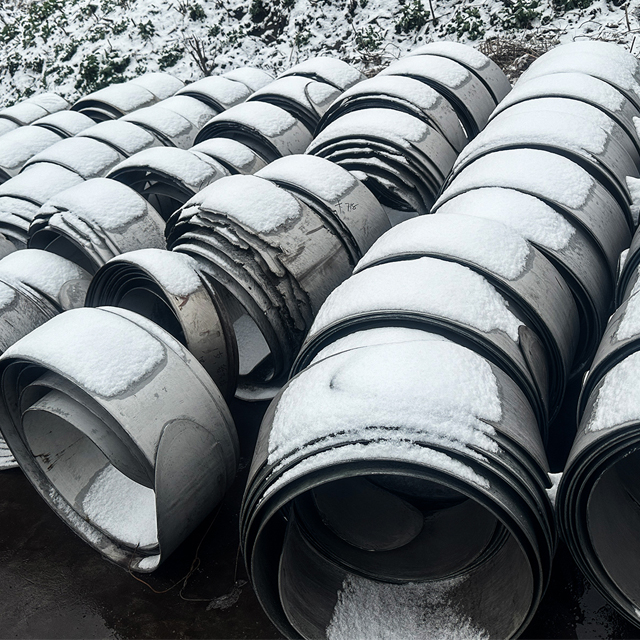
Detailed Introduction to Inconel 601 High-Temperature Alloy Material
Inconel 601 is an excellent nickel-chromium alloy that performs well in many application scenarios requiring resistance to high temperatures and corrosive environments. With its unique chemical composition and excellent physical properties, it plays a key role in various industrial fields.
Chemical Composition
The chemical composition of Inconel 601 is carefully formulated, and the elements work together to endow the alloy with excellent performance. The main components and their content ranges are as follows:
Ni | Cr | Fe | Al | C | Mn | Si | S | Cu |
58% - 63% | 21% - 25% | Remainder | 1.0% - 1.7% | ≤0.10% | ≤1.0% | ≤0.5% | ≤0.015% | ≤1.0% |
Physical Properties
Density: Approximately 8.11 g/cm³, offering a good strength-to-weight ratio for high-temperature components.
Melting Point: Solidus at ~1320°C, liquidus at ~1410°C; typically used below 1100°C for long-term stability.
Thermal Expansion Coefficient: ~14.7×10⁻⁶/°C (20 - 1000°C), minimizing thermal stress under temperature fluctuations.
Thermal Conductivity: ~11.4 W/(m·K) at room temperature, increasing to ~22.5 W/(m·K) at 1000°C, aiding heat dispersion.
Electrical Resistivity: ~1.12 μΩ·m at room temperature, ~1.25 μΩ·m at 1000°C, suitable for self-regulating heating elements.
Magnetism: Weakly magnetic in annealed state (relative permeability <1.01), ideal for magnetically sensitive applications.
Elastic Modulus: ~214 GPa at room temperature, ~172 GPa at 800°C, balancing strength and deformation resistance in high-stress parts.
Designations and Standards
United States: UNS N06601, covered by ASTM standards (e.g., ASTM B166 for bars/wires, B168 for plates) and AMS specifications (e.g., AMS 5540) for aerospace use.
Germany: Werkstoff Nr. 2.4851, regulated by DIN standards (e.g., DIN 17742, 17750) for quality control.
Other Regions: Corresponding designations in French, Japanese (e.g., NCF 601-like), and British standards ensure consistency across global industries, with minor variations in specs but uniform performance goals.