
English 
Room501, Building32, No. 518 Xinzhuan Highway, Songjiang District, Shanghai, China 201612
Views: 0 Author: Site Editor Publish Time: 2026-10-22 Origin: Site


Material selection in high-temperature and corrosive environments carries massive stakes. Specifying the wrong nickel-chromium alloy leads to catastrophic failure, extensive downtime, and severe safety hazards. Engineers face a constant challenge navigating the subtle differences between high-performance superalloys. The debate between inconel 600 vs 601 represents a core engineering challenge. These two materials share a similar base metallurgy and are frequently confused during initial project scoping. However, their distinct alloying elements dictate vastly different performance outcomes under thermal cycling and mechanical stress. Choosing the correct grade requires moving beyond basic specification sheets. You must evaluate exact operating temperatures, cyclic exposure rates, load-bearing requirements, and the presence of environmental corrosives. A thorough understanding of how chromium and aluminum alter the microstructural behavior of these alloys ensures structural integrity in the most demanding industrial applications.
Compositional Shift: The primary difference lies in Inconel 601’s higher chromium content and the addition of aluminum, which fundamentally alters its high-temperature behavior compared to the baseline Inconel 600.
Oxidation Resistance: Inconel 601 vastly outperforms Inconel 600 in severe, cyclic high-temperature environments due to its superior antioxidant properties and ability to form a tightly adherent, spall-resistant oxide layer.
Mechanical Strength: Inconel 600 generally offers superior tensile strength and robustness under mechanical load, making it preferable for specific structural applications where extreme oxidation is not the primary failure mode.
Application Alignment: Selection dictates project success—Inconel 600 is the standard for chemical processing, fasteners, and stress-corrosion cracking resistance, while 601 is the standard for thermal processing, woven wire mesh, and aerospace applications involving extreme heat.
Table of Contents
To accurately specify a material for aggressive environments, you must first understand its foundational metallurgy. Both alloys belong to the austenitic nickel-chromium family. Metallurgists designed these materials specifically to withstand conditions that rapidly destroy standard austenitic stainless steels like 304 or 316. They provide exceptional resistance to a wide variety of severe corrosives and extreme heat, but they achieve these results through different microstructural mechanisms.
Inconel 600 is a nickel-chromium-iron alloy known for its corrosion resistance, oxidation resistance, and useful high-temperature mechanical properties. Its high nickel content provides resistance to chloride-induced stress corrosion cracking in many environments. The alloy is strengthened mainly through solid-solution strengthening and cold working, making it suitable for chemical processing and industrial heating equipment. Explore our Inconel 600 Alloy for available product specifications.

Inconel 601 is a nickel-chromium-iron alloy containing additional aluminum for improved high-temperature oxidation resistance. Its chromium and aluminum content helps form a protective oxide layer, making it particularly suitable for industrial furnaces, heat-treatment equipment, and repeated thermal cycling. View our Inconel 601 Alloy for available material forms.
Inconel 600 and 601 are solid-solution-strengthened nickel-based alloys with stable austenitic structures. Both offer corrosion resistance, high-temperature performance, and good fabrication potential using suitable procedures. Their main difference lies in chemical composition, particularly the higher chromium and aluminum content of Inconel 601.
Chemical composition is a key factor behind the different performance characteristics of Inconel 600 and 601. Nickel provides the base structure, while chromium and aluminum influence oxidation resistance.
Inconel 600 (UNS N06600) typically contains at least 72% nickel, 14–17% chromium, and 6–10% iron. Its nickel-rich composition supports resistance to selected corrosive environments, while chromium contributes to oxidation resistance. These properties make it suitable for chemical processing and industrial heating applications.
Inconel 601 (UNS N06601) typically contains 58–63% nickel, 21–25% chromium, and 1.0–1.7% aluminum, with iron making up much of the remaining composition. The higher chromium and aluminum content improves oxidation resistance by supporting the formation of protective surface oxides during high-temperature exposure.
Element | Inconel 600 | Inconel 601 |
|---|---|---|
Nickel (Ni) | ≥72% | 58–63% |
Chromium (Cr) | 14–17% | 21–25% |
Iron (Fe) | 6–10% | Balance |
Aluminum (Al) | No specified intentional addition | 1.0–1.7% |
UNS Number | N06600 | N06601 |
Main Advantage | Corrosion resistance and versatility | High-temperature oxidation resistance |
Understanding the chemical breakdown allows engineers to predict how these materials will behave in the field. The core performance differences dictate which alloy will survive your specific operational environment and which will fail prematurely, causing facility downtime.
Inconel 600 and Inconel 601 both offer good high-temperature oxidation resistance, but Inconel 601 contains additional aluminum that helps form a protective oxide layer. This makes 601 particularly suitable for oxidizing environments and repeated thermal cycling. Inconel 600 remains a useful choice for high-temperature applications where its corrosion resistance and other material properties match the operating conditions.
Mechanical strength depends on alloy grade, product form, and material condition. Inconel 600 and 601 offer useful tensile strength and ductility, but neither grade is universally stronger under all temperatures and loading conditions. Engineers should compare the applicable material specifications and elevated-temperature strength data before selection.
Inconel 600 offers strong resistance to chloride-induced stress corrosion cracking in many environments because of its high nickel content. Both alloys also provide resistance to selected carburizing conditions, while Inconel 601 may offer advantages where oxidation resistance is especially important. Actual performance depends on temperature, atmosphere, chemical exposure, and operating stress.
Performance Factor | Inconel 600 | Inconel 601 |
|---|---|---|
Main Alloy System | Nickel-Chromium | Nickel-Chromium-Aluminum |
Oxidation Resistance | Good | Particularly strong |
Thermal Cycling | Suitable for selected conditions | Often preferred for demanding oxidizing cycles |
Chloride SCC Resistance | Strong in many conditions | Grade- and environment-dependent |
High-Temperature Strength | Depends on temperature and condition | Depends on temperature and condition |
Typical Applications | Chemical processing, furnace components | Industrial furnaces, heat-treatment equipment |
Inconel 600 is commonly selected for chemical processing equipment, furnace components, and applications requiring resistance to selected corrosive environments. Its nickel-rich composition makes it useful in certain caustic and chloride-containing conditions. Explore our Inconel 600 Alloy for available plates, bars, pipes, and other product forms.
Inconel 601 is particularly suitable for high-temperature oxidizing environments and industrial heating applications. Its aluminum-enhanced oxide protection makes it a relevant choice for furnace fixtures, heat-treatment baskets, thermal processing equipment, and selected exhaust components. View our Inconel 601 Alloy for available specifications and material forms.
Inconel 600 and 601 can be used for fasteners, wire products, and fabricated components, but selection depends on service temperature, mechanical loading, and corrosion exposure. Inconel 600 may be considered for chemically demanding applications, while 601 is often preferred for components exposed to repeated high-temperature oxidation. Fastener strength and wire dimensions must be verified separately.
Inconel alloy selection should begin with operating temperature, heating frequency, chemical exposure, and required mechanical strength. Inconel 600 may be appropriate for selected chemical processing environments, while Inconel 601 is often considered when high-temperature oxidation and thermal cycling are major concerns.
Mechanical strength and oxidation resistance must be evaluated together. Inconel 601 may provide advantages in severe oxidizing conditions, but the final choice should also satisfy the component's load-bearing requirements. Compare allowable stress, creep properties, and oxidation data at the intended operating temperature.
Inconel 600 and 601 can be machined, formed, and welded using suitable procedures. Both alloys may work-harden during machining, requiring appropriate tooling and process control. Welding should use compatible filler metals, clean joint surfaces, and qualified procedures. Heat treatment requirements depend on product condition and intended service.
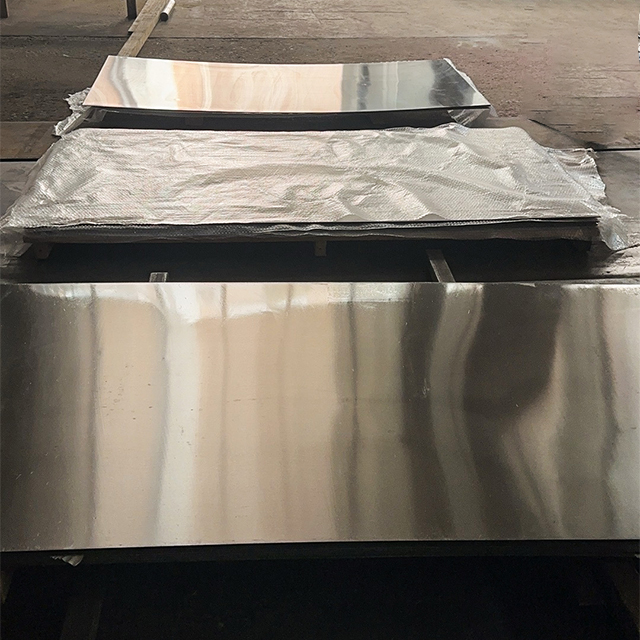
Inconel 600 and 601 availability varies by product form, dimensions, and order quantity. Common forms include sheets, plates, bars, pipes, and wires. Buyers should verify the relevant ASTM or other applicable specification, material condition, delivery schedule, and Material Test Report (MTR) before procurement.
Application Requirement | Alloy to Consider | Main Reason |
|---|---|---|
Chemical processing equipment | Inconel 600 | Nickel-rich corrosion resistance |
High-temperature furnace fixtures | Inconel 601 | Oxidation resistance |
Repeated heating and cooling | Inconel 601 | Protective oxide performance |
Selected caustic environments | Inconel 600 | Corrosion resistance under suitable conditions |
High-temperature fasteners | 600 or 601 | Depends on strength and service environment |
Furnace wire and fabricated parts | Inconel 601 | Resistance to high-temperature oxidation |
Document your exact minimum, maximum, and continuous operating temperatures using calibrated data loggers.
Calculate the frequency and severity of thermal cycling in your specific furnace or process line.
Audit your environment for specific chemical corrosives, particularly chlorides, sulfur compounds, and caustic alkalis.
Consult directly with a metallurgist or material supplier to verify your selection against your documented operational parameters before issuing a purchase order.
A: Inconel 600 operates reliably up to 1150°C (2100°F) in continuous, static heat environments. Inconel 601 handles temperatures up to 1200°C (2200°F) and provides vastly superior performance in cyclic heating environments due to its spall-resistant oxide layer.
A: Yes, Inconel 600 generally possesses higher tensile and yield strength at both room and elevated temperatures. Its higher nickel content makes it more mechanically robust, whereas Inconel 601 sacrifices slight mechanical strength to achieve superior oxidation resistance.
A: Yes, these alloys can be welded together. You must use compatible filler metals, typically ERNiCr-3 (Inconel 82) or ENiCrFe-3 (Inconel 182). Strict pre-weld cleaning is mandatory to remove any contaminants that could cause hot cracking in the weld joint.
A: No, both alloys are non-magnetic. They are austenitic, solid solution strengthened nickel-chromium alloys. Their microstructural composition prevents magnetic permeability, making them suitable for specialized electronic and aerospace applications.
A: Inconel 601 is the superior choice for woven wire mesh. Wire mesh has a high surface-area-to-volume ratio, making it vulnerable to oxidation. The aluminum content in 601 creates a protective scale that prevents the thin wires from degrading and breaking under thermal stress.


