
English 
Room501, Building32, No. 518 Xinzhuan Highway, Songjiang District, Shanghai, China 201612
Views: 0 Author: Site Editor Publish Time: 2026-01-08 Origin: Site


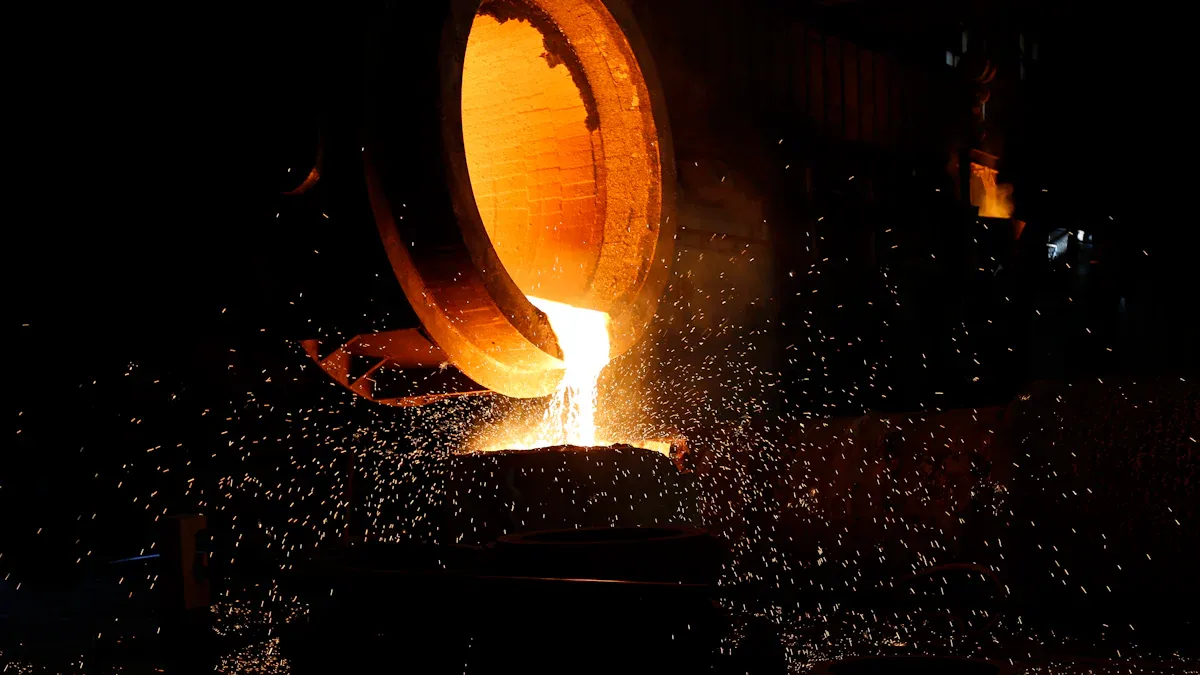
You might be wondering, what is Inconel? Introduction of Composition & Properties of Inconel Alloys is essential to understanding why this material is so highly valued. Inconel is a nickel-based superalloy engineered for exceptional strength and stability in the most demanding environments. When considering what is Inconel? Introduction of Composition & Properties of Inconel Alloys reveals that its unique blend of nickel, chromium, and other elements allows it to withstand extreme heat and aggressive chemicals, making it indispensable across various industries.
Bozhong proudly offers high-quality Inconel products that adhere to strict ASTM standards. You’ll find Inconel in applications where ordinary metals simply can’t perform. For example, the table below highlights how different Inconel grades are utilized in challenging environments:
| Inconel Grade | Common Applications |
|---|---|
| Inconel 600 | Nuclear and automotive applications |
| Inconel 625 | Aerospace, chemical processing, pollution |
| Inconel 718 | Aerospace and automotive parts |
By exploring what is Inconel? Introduction of Composition & Properties of Inconel Alloys, you gain insight into why this material excels in harsh conditions. Its advanced composition and remarkable properties are the reasons so many industries rely on Inconel for their most demanding applications. If you’re seeking a solution for high-performance needs, understanding what is Inconel? Introduction of Composition & Properties of Inconel Alloys will show you why it’s the trusted choice for the toughest jobs.
Inconel is a superalloy made mostly of nickel. It is strong and stays stable in tough conditions. It does not break down in high heat or from rust. This makes it great for things like airplanes and power plants. There are different types of Inconel, like 600, 625, and 718. Each type has special features for certain uses. Inconel is made in a special way so it works when other metals do not. Picking Inconel means things last longer and work well in hard places.
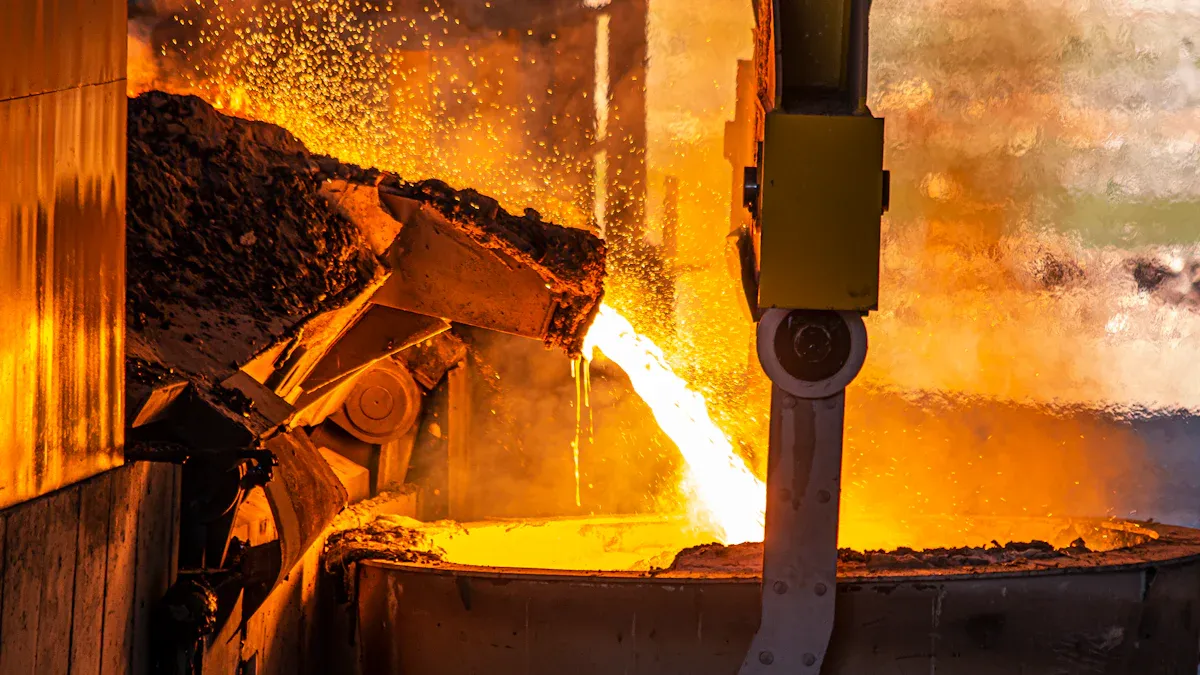
You might ask why Inconel is special. Inconel is a superalloy. It works well in tough places. Inconel alloys are made from nickel. These alloys can handle heat, corrosion, and pressure. Ordinary metals cannot do this. Bozhong sells Inconel that meets ASTM rules. You can count on Bozhong for good quality and quick shipping.
The mix of elements makes Inconel strong. Nickel is the main part in every grade. Chromium, iron, and other elements join nickel. Each element helps Inconel work better. The table below shows what is inside Inconel:
| Element | Percentage Range |
|---|---|
| Nickel (Ni) | 50.0 – 55.0 |
| Chromium (Cr) | 17.0 – 21.0 |
| Iron (Fe) | Balance |
| Niobium (Nb) | 4.75 – 5.50 |
| Molybdenum (Mo) | 2.80 – 3.30 |
| Titanium (Ti) | 0.65 – 1.15 |
| Aluminum (Al) | 0.20 – 0.80 |
| Cobalt (Co) | 1.00 max |
| Carbon (C) | 0.08 max |
| Manganese (Mn) | 0.35 max |
| Silicon (Si) | 0.35 max |
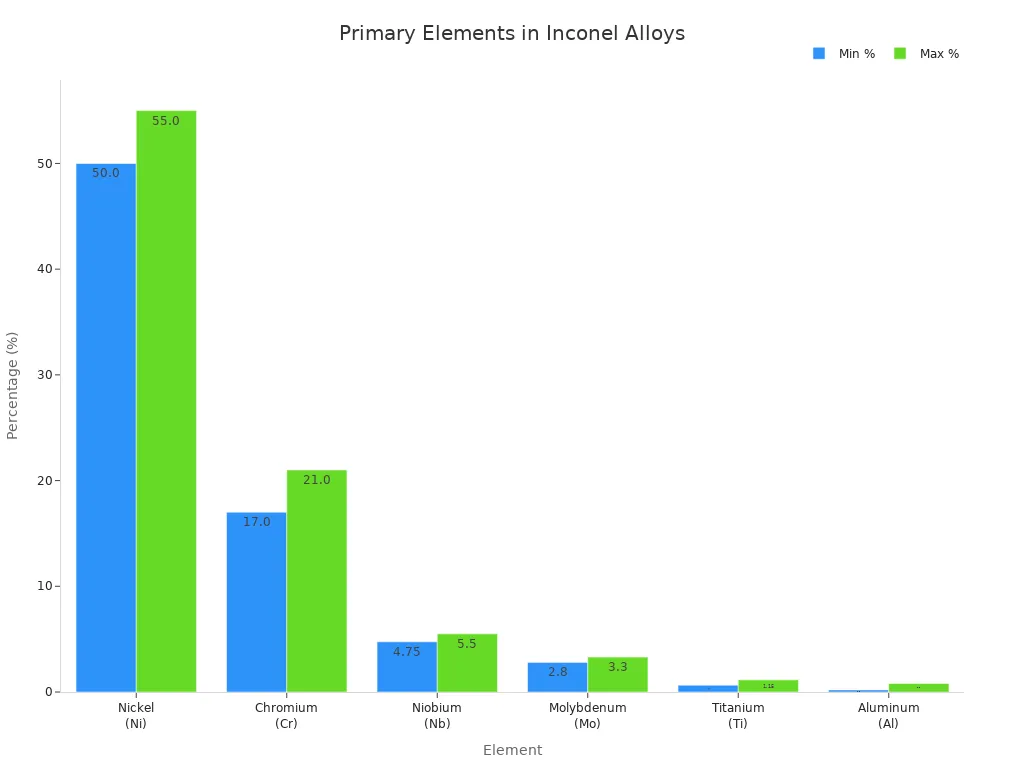
Nickel is the main part of Inconel. Chromium helps stop rust. Molybdenum and niobium make Inconel strong and safe from corrosion. Titanium and aluminum help Inconel stay stable in heat. Each grade uses a different mix. This gives you choices for different jobs.
The tiny structure inside Inconel matters too. It has solid-solution strengthening and precipitation hardening. These help Inconel stay strong when hot. The structure forms layers that protect it. Inconel 625 uses molybdenum and niobium to keep grains stable. This stops grains from moving and keeps Inconel tough.
People pick Inconel for its great features. The mix and structure give it strength in heat. Inconel alloys keep their shape and power even above 1,000°C. You see this in grades like Inconel 600, 625, and 718.
Here are some top properties of Inconel:
High tensile and yield strength at room and high heat
Great resistance to corrosion and oxidation
Strong during heating and cooling cycles
Good for welding and making things
The table below shows how strong Inconel is:
| Property | Value (Metric) | Value (Imperial) | Condition |
|---|---|---|---|
| Ultimate Tensile Strength | 655 MPa | 95,000 psi | Annealed, room temperature |
| Yield Strength | 310 MPa | 45,000 psi | Annealed, room temperature |
| Ultimate Tensile Strength (Elevated) | 550 MPa | 79,800 psi | Annealed, 550°C |
| Yield Strength (Elevated) | 180 MPa | 26,100 psi | Annealed, 550°C |
Inconel stays strong when heated. It can stretch from 21% to 45% before breaking. The tiny structure inside helps Inconel last longer. It resists damage well.
Each grade of Inconel has special features. Inconel 600 fights rust well. Inconel 625 is extra safe from corrosion and strong against wear. Inconel 718 is best for high strength and fighting wear. You can pick the grade that fits your needs.
When things get really hot, you need a strong material. Inconel is part of the high-temperature nickel superalloy group. This metal works where other metals fail. Inconel keeps its strength and shape in heat. You see it in jet engines and power plants. These places get hotter than most metals can handle.
The table below explains why Inconel is a superalloy:
| Property | Description |
|---|---|
| High Strength | Inconel 718 stays very strong when it gets hot. |
| Corrosion Resistance | This alloy does not get damaged by harsh chemicals. |
| Temperature Stability | It works well and stays stable in extreme heat. |
Inconel 625 and Inconel 718 work up to 980°C (1800°F) if the stress is low. Even with high stress, they work up to 700°C (1300°F).
| Inconel Grade | Max Service Temperature (Low Stress) | Max Service Temperature (High Stress) |
|---|---|---|
| Inconel 625 | ~980°C / 1800°F | ~700°C / 1300°F |
| Inconel 718 | ~980°C / 1800°F | ~700°C / 1300°F |
Inconel does not bend or change shape easily in heat. Its microstructure stops it from stretching when hot. Stainless steels cannot do this at high temperatures. Inconel helps you build things that last.
You want your machines to last in tough places. Inconel gives great protection from corrosion and oxidation. This nickel-chromium superalloy makes a strong oxide layer. You can use it in chemical plants and near saltwater.
Inconel 718 does not corrode much in seawater. Some samples lose less than 1 µm each year, so saltwater does not hurt them.
After 5000 hours in seawater, some Inconel samples only lose 1.21 µm per year. This shows they last a long time.
Inconel alloys can handle many acids and chemicals. They are good for chemical plants.
Inconel also resists oxidation at high heat. The oxide layer forms fast and protects the metal. The table below shows how Inconel handles oxidation:
| Treatment | Temperature (°C) | Effect on Oxide Scale | Result |
|---|---|---|---|
| Pre-oxidation | 900 | Thinner oxide layers | Better hot corrosion resistance |
| Temperature (°C) | Alloy Type | Oxidation Behavior | Notes |
|---|---|---|---|
| 900 | LPBF | Same oxidation rate | - |
| 1050 | LPBF | Worse oxidation | Caused by small defects |
| 1000 | LPBF (heat treated) | Better oxidation | Changed microstructure helps |
Inconel keeps its oxidation resistance above 1000°C. This makes it great for furnaces and exhaust systems.
You may wonder how Inconel compares to other metals. Inconel is stronger and resists creep better than stainless steel at high heat. Stainless steel is easier to shape but loses strength in heat. Inconel also fights corrosion and oxidation better.
Titanium alloys are lighter and have a good strength-to-weight ratio. But they lose strength above 350°C. Inconel stays strong at much higher temperatures.
| Property | Inconel Alloys | Titanium Alloys |
|---|---|---|
| Density / weight | Heavier, over 8.0 g/cm³ | Lighter, Ti-6Al-4V is about 4.43 g/cm³ |
| Strength at room temperature | High strength, even higher when treated | Great strength for its weight |
| High-temperature performance | Stays strong at high heat | Good up to about 350°C |
| Corrosion resistance | Excellent in many environments | Good, but some acids can damage it |
| Fatigue & creep | Very good at high heat | Good for light designs |
You can also compare Inconel to Hastelloy and Monel. Inconel costs less than Hastelloy but more than Monel. The price comes from its nickel and chromium. These give Inconel its strength and resistance.
| Alloy | Cost Comparison |
|---|---|
| Inconel | High cost because of nickel and chromium. |
| Hastelloy | Usually costs more than Inconel and Monel. |
| Monel | Cheaper than Inconel and Hastelloy. |
You pick Inconel when you need a superalloy for heat, corrosion, and oxidation resistance. That is why many industries trust Inconel for their hardest jobs.

Inconel is used in many important jobs. It is a superalloy that can handle heat, pressure, and corrosion. Bozhong sells inconel in many shapes and sizes. You can get plates, sheets, bars, rods, pipes, tubes, wires, coils, forgings, castings, fasteners, and custom parts. This makes it easy to solve hard problems in many industries.
Aerospace and aviation need strong materials. Inconel is picked for jet engines and gas turbines. It is used in turbine discs, blades, chambers, and exhausts. These parts need to stay strong and stable in high heat. Inconel keeps its shape and strength, even when it gets very hot.
| Product Form | Description |
|---|---|
| Plates and sheets | Different thicknesses and sizes |
| Bars and rods | Many diameters and lengths |
| Pipes and tubes | Many diameters and wall thickness |
| Wires and coils | Many gauges and lengths |
| Forgings and castings | Custom shapes and sizes |
| Fasteners | Bolts, screws, and springs |
| Custom parts | Made to your request |
You can trust inconel to work well in these important jobs.
Inconel is also used in energy and power plants. In nuclear plants, it is used for steam generators and reactor vessels. It can handle high heat, corrosion, and stress. In fossil fuel plants, inconel is used in systems that clean flue gas. It stands up to acids in these places. These jobs need materials that last long and work safely.
| Application Area | Specific Use Cases | Properties Utilized |
|---|---|---|
| Nuclear Power Plants | Steam generators, reactor vessels | Handles heat, corrosion, and stress |
| Fossil Fuel Power Plants | Flue gas cleaning systems | Resists corrosion from acids |
Inconel is a good pick for chemical and marine jobs. It is used in pipes, valves, and wellhead parts that touch harsh chemicals and seawater. Inconel does not get pitted or corroded, even in saltwater. This makes it great for drilling, oil and gas work, and undersea cables. Inconel helps protect your equipment and makes it last longer.
Tip: Inconel alloys do not get damaged by acids, alkalis, or chlorides. This makes them great for tough places.
Bozhong follows strict rules like ISO and ASTM. You get inconel you can trust for your hardest jobs.
You can count on inconel for hard jobs. It works well because it can handle heat. It does not get damaged by corrosion. It is very strong. It keeps working in tough places.
Handles high heat
Fights corrosion
Stays strong
Works in harsh places
Bozhong helps you with fast shipping and good partners.
| Global Advantage | Details |
|---|---|
| Logistics Network | Quick delivery everywhere |
| Trusted Partnerships | Good ties with steel companies |
Recycling inconel saves resources and helps the earth. Pick Bozhong for good quality, custom help, and steady supply.
You can use Inconel in places with temperatures above 1,000°C (1,832°F). It keeps its strength and shape even when things get very hot.
You may find Inconel harder to weld or machine than regular steel. Special tools and skills help you get the best results.
You should pick Inconel when you need a material that stays strong in high heat and resists corrosion better than stainless steel.
You do not need to worry about rust. Inconel forms a protective layer that stops rust and resists many chemicals, even in harsh environments.


