
English 
Room501, Building32, No. 518 Xinzhuan Highway, Songjiang District, Shanghai, China 201612
Views: 0 Author: Site Editor Publish Time: 2025-12-15 Origin: Site


Can one metal survive both extreme heat and brutal corrosion? Hastelloy, a high-performance Nickel Alloy, was built for that exact challenge. In this article, you will learn how its composition controls corrosion and temperature performance, and why it solves failures that defeat ordinary industrial alloys.
Hastelloy is not a single metal but a family of high-performance Nickel Alloy materials engineered for extreme corrosion and temperature conditions. It was originally developed for chemical environments where stainless steel and standard alloys fail rapidly. Unlike many Nickel Alloys that prioritize mechanical strength or oxidation resistance alone, Hastelloy is designed around chemical stability first, with strength as a controlled secondary function. This design logic explains why it performs so well in aggressive industrial environments.
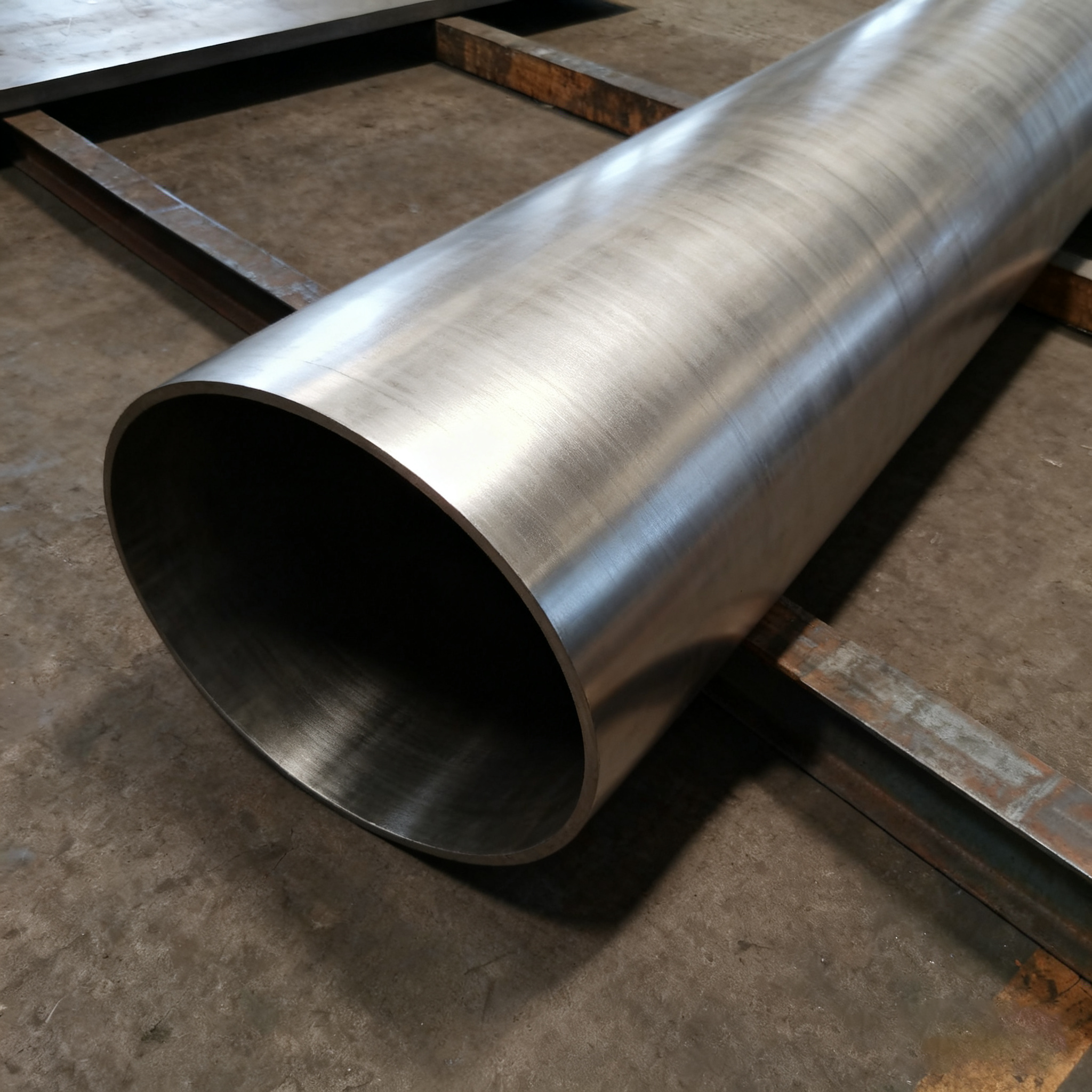
In the Nickel Alloy system, Hastelloy belongs mainly to the solid-solution strengthened superalloy category. Nickel forms the structural base, while molybdenum and chromium provide the core corrosion-control mechanisms. Nickel ensures thermal stability and structural integrity at elevated temperatures, chromium delivers oxidation resistance, and molybdenum protects against reducing acid attack. Each Hastelloy grade is defined by the ratio of these elements rather than by its final application, which makes chemical composition the primary classification logic.
Most conventional Nickel Alloys are optimized for either heat resistance or general corrosion control. Hastelloy is engineered to survive both oxidizing and reducing corrosive environments at the same time. This dual-mode resistance is rare among Nickel Alloys. For example, Inconel performs extremely well at high temperatures but weakens in strong reducing acids, while Monel resists seawater but struggles in mixed acid environments. Hastelloy maintains performance in all these conditions because its molybdenum content is significantly higher than that of ordinary Nickel Alloys.
Molybdenum is the defining element that separates Hastelloy from other Nickel Alloy families. It strengthens the nickel matrix through lattice distortion, enhances resistance to chloride-induced pitting, and suppresses reducing acid corrosion. High molybdenum content also increases alloy density and melting point, which directly impacts both performance and cost. This is why Hastelloy B series can rely almost entirely on molybdenum for corrosion resistance while containing very little chromium.
The performance of Hastelloy is controlled by deliberate multi-element balancing. Each major alloying element contributes either to corrosion resistance, mechanical strength, or fabrication stability. The five most influential elements are nickel, chromium, molybdenum, tungsten, and iron, while minor additions fine-tune special behaviors.
Element | Main Function | Effect on Performance |
Nickel (Ni) | Base structure element | Provides high-temperature stability and creep resistance |
Chromium (Cr) | Oxidation protection | Forms protective oxide film in oxidizing environments |
Molybdenum (Mo) | Reducing corrosion control | Enhances resistance to hydrochloric and sulfuric acids |
Tungsten (W) | Solid solution strengthening | Increases strength and pitting resistance |
Iron (Fe) | Cost and structure adjustment | Improves mechanical balance and manufacturability |
Copper (Cu) | Sulfuric acid resistance | Improves corrosion resistance in acid pickling systems |
Cobalt (Co) | High-temperature strength | Enhances creep and thermal stability |
Nickel provides the stable face-centered cubic crystal structure that remains intact at temperatures above 1000°C. This stability prevents phase collapse and supports long-term creep resistance under continuous stress. Most Hastelloy grades contain more than 50% nickel, which already places them above many standard Nickel Alloy systems in terms of thermal reliability.
Chromium forms a dense oxide film that protects against oxidizing acids such as nitric acid, while molybdenum suppresses corrosion in reducing acids such as hydrochloric and sulfuric acids. The ratio between chromium and molybdenum defines the corrosion behavior of each Hastelloy family. B Series uses very high molybdenum with minimal chromium for reducing environments. C Series balances both for mixed corrosion. G Series increases chromium to focus on oxidizing conditions.
Tungsten atoms are significantly larger than nickel atoms and distort the crystal lattice strongly. This distortion increases yield strength through solid-solution strengthening without creating brittle phases. Tungsten also enhances resistance to localized pitting corrosion and stabilizes high-temperature performance. Grades such as Hastelloy C-276 rely on tungsten to maintain strength in severe service.
Copper behaves differently from most alloying elements because it enhances corrosion resistance in sulfuric acid environments across a wide concentration range. Hastelloy C-2000 incorporates copper for this reason and achieves superior sulfuric acid performance compared with many other Nickel Alloy systems that lack copper.
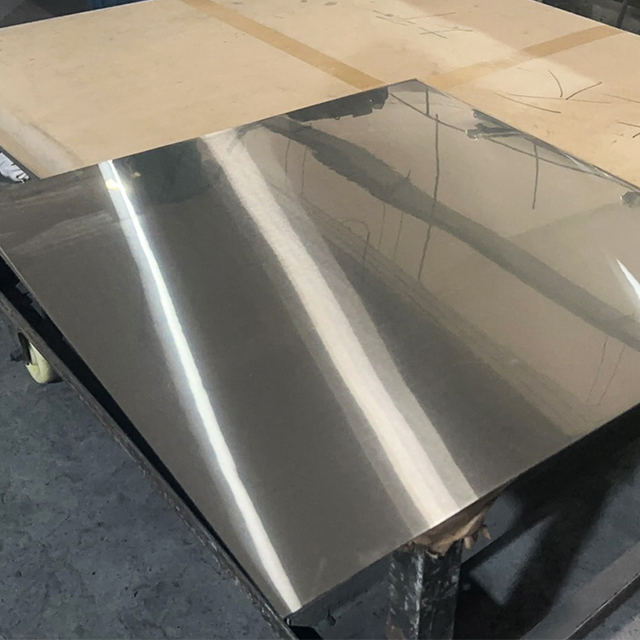
Cobalt strengthens alloys at elevated temperatures by slowing diffusion and creep mechanisms. Hastelloy X contains cobalt and elevated iron content to prioritize high-temperature strength rather than extreme corrosion resistance. It is commonly used in furnace components and gas turbine structures where mechanical stability under heat dominates material selection.
Carbon promotes carbide formation at grain boundaries during welding, which can trigger intergranular corrosion. Modern Hastelloy grades strictly limit carbon below about 0.02% to preserve corrosion resistance in heat-affected zones. This low-carbon design ensures that welded joints maintain nearly the same corrosion performance as the base metal.
The mechanical behavior of Hastelloy determines its pressure limits, fatigue resistance, and fabrication feasibility. Most Hastelloy grades rely on solid-solution strengthening rather than precipitation hardening, which favors toughness and weldability over peak strength.
Precipitation-strengthened Nickel Alloys form gamma-prime phases that generate very high strength but reduce ductility and weldability. Solid-solution strengthened alloys rely on atomic lattice distortion and maintain better toughness. Hastelloy mainly belongs to the solid-solution group, which explains why it machines slowly yet welds reliably.
Most solid-solution Nickel Alloys use chromium and iron as the primary strengthening agents. Hastelloy adds heavy elements such as molybdenum and tungsten, which create much stronger lattice distortion. This significantly increases yield strength and hardness. Hastelloy B-2, for example, reaches much higher strength than many conventional solution-strengthened alloys.
Hastelloy C-22 is optimized for corrosion resistance with high ductility, while C-22HS introduces precipitation strengthening to boost mechanical strength. C-22 typically reaches a tensile strength near 690 MPa with elongation around 45%, while C-22HS can exceed 1200 MPa tensile strength with elongation reduced to about 15%. This illustrates the trade-off between pressure capacity and formability.
Property | Hastelloy C-22 | Hastelloy C-22HS |
Tensile Strength | ~690 MPa | >1200 MPa |
Yield Strength | ~310 MPa | ~1100 MPa |
Elongation | ~45% | ~15% |
Strength Type | Solid solution strengthened | Precipitation strengthened |
Main Advantage | Maximum corrosion resistance | Ultra-high pressure strength |
Physical properties such as density, melting point, and thermal expansion define heat transfer behavior, structural weight, and dimensional stability.
Due to its high molybdenum and tungsten content, Hastelloy typically exhibits densities between 8.7 and 9.2 g/cm³. In comparison, Inconel 625 remains near 8.4 g/cm³, while Monel often stays below 8.9 g/cm³. This higher density increases structural load and inertia but also contributes to mechanical rigidity.
Most Hastelloy grades melt between 1260°C and 1400°C. Their safe long-term service temperatures usually remain below 1000°C, which allows continuous operation in high-temperature chemical equipment without phase instability.
Hastelloy exhibits moderate thermal expansion behavior close to that of austenitic stainless steels. This similarity simplifies flange sealing and reduces thermal mismatch stress in piping systems and heat exchangers. Dimensional stability under cyclic heating further improves long-term equipment reliability.
Hastelloy grades are grouped into families based on corrosion logic rather than application labels.
The B Series contains very little chromium and extremely high molybdenum. This structure provides outstanding resistance to hydrochloric acid across almost all concentrations and temperatures. However, it performs poorly in oxidizing media. B-3 improves thermal stability compared with earlier B-2 grades.
The C Series balances chromium and molybdenum to handle both oxidizing and reducing corrosion. Grades such as C-276 and C-22 dominate this category and resist pitting, crevice corrosion, and stress corrosion cracking in mixed acid systems.
The G Series increases chromium while lowering molybdenum. These alloys perform well in oxidizing acid environments such as phosphoric acid and fertilizer production systems where oxidation dominates corrosion behavior.
Hastelloy N targets nuclear molten salt service. Hastelloy S pushes broad corrosion resistance. Hastelloy W bridges B and C performance ranges. Hastelloy X sacrifices corrosion resistance to maximize high-temperature mechanical strength.
Although many Nickel Alloys overlap in service fields, Hastelloy dominates where reducing corrosion and mixed chemical attack exist.
Inconel prioritizes oxidation resistance and extreme heat tolerance, making it ideal for jet engines and turbine components. Hastelloy prioritizes chemical corrosion resistance, especially in reducing acids. Acid reactors favor Hastelloy, while combustion systems favor Inconel.
Monel relies primarily on nickel and copper and performs well in seawater and mild reducing environments. Without high molybdenum content, Monel cannot tolerate strong mineral acids. Hastelloy remains stable under these conditions due to its molybdenum-driven corrosion control.
Only Hastelloy combines very high nickel with very high molybdenum. This pairing suppresses hydrogen evolution and blocks reducing acid attack mechanisms. Among common Nickel Alloy systems, this capability remains unmatched.
Alloy Type | Main Strength | Main Limitation | Typical Use |
Hastelloy | Strongest reducing + mixed acid resistance | High cost | Acid reactors, scrubbers |
Inconel | Extreme heat and oxidation resistance | Weak in reducing acids | Turbines, jet engines |
Monel | Seawater and mild corrosion resistance | Poor in strong acids | Marine piping, pumps |
The high cost of Hastelloy is not driven by branding but by elemental chemistry and manufacturing difficulty.
Molybdenum and tungsten experience significant market price fluctuations and dominate raw material costs. Many Hastelloy grades contain over 20% combined heavy metals, which directly drives base alloy pricing.
Hastelloy work-hardens rapidly and traps heat at the cutting edge. Tool wear increases quickly, and cutting speeds must be kept low. Coolant demand also rises. These factors significantly increase machining time and production cost.
Although Hastelloy carries a high purchase price, its service life often exceeds stainless steel by five to ten times in corrosive environments. Reduced maintenance, fewer shutdowns, and longer replacement cycles frequently make Hastelloy the lower total-cost option over the full equipment life cycle.
Hastelloy is not just a Nickel Alloy, but a molybdenum-driven corrosion-resistant system. Element ratios directly control its oxidation resistance, reducing corrosion performance, and high-temperature stability in extreme environments.
Correct Hastelloy selection depends on corrosion mechanism and composition logic. With strong supply capability and materials expertise, Shanghai Bozhong Metal Group Co., Ltd. provides reliable Hastelloy products that improve service life, safety, and production efficiency.
A: Hastelloy is a high-performance Nickel Alloy designed for extreme corrosion and high-temperature environments.
A: This Nickel Alloy uses a balanced chromium–molybdenum ratio to control multiple corrosion mechanisms.
A: This Nickel Alloy contains much higher molybdenum for superior reducing acid resistance.
A: Yes, this Nickel Alloy maintains strength and stability below 1000°C in harsh service.
A: This Nickel Alloy contains costly molybdenum and tungsten and requires complex machining.
A: Selection depends on corrosion type, temperature, and Nickel Alloy composition logic.


