
English 
Room501, Building32, No. 518 Xinzhuan Highway, Songjiang District, Shanghai, China 201612
Views: 0 Author: Site Editor Publish Time: 2025-12-22 Origin: Site


Why do some metal parts stay precise under extreme stress while others fail early? The answer often lies in Cold Drawing. In this article, you will learn what Cold Drawing really is, which materials truly require it, and how it controls strength, surface quality, and precision.
Cold Drawing is a metal forming process performed at room temperature. The material is pulled through a precision die to reduce its cross-section and improve dimensional accuracy. Unlike hot forming, it relies on mechanical force rather than thermal softening. As the material passes through the die, its length increases while diameter decreases in a controlled way. This allows manufacturers to achieve tight tolerances and consistent cross-section shapes.
Cold Drawing is widely used for long products such as bars, wires, and tubes. It is especially suitable for applications requiring smooth surfaces and stable mechanical properties.
The key difference between Cold Drawing and hot drawing is processing temperature. Cold Drawing occurs at ambient temperature, while hot drawing requires heating the material above its recrystallization point. This difference leads to major changes in surface quality, strength, and dimensional control.
Process Type | Temperature | Surface Finish | Dimensional Accuracy | Strength Change |
Cold Drawing | Room temp | Very smooth | Very high | Increases |
Hot Drawing | High temp | Oxidized | Moderate | Limited change |
Cold Drawing produces brighter surfaces and higher precision. Hot drawing is better for large deformation but offers lower accuracy.
Cold Drawing works only when drawing force sits between yield strength and tensile strength. If force stays below yield strength, no plastic deformation occurs. If force exceeds tensile strength, fracture happens. This mechanical balance defines whether a material is draw-able.
Mechanical Term | Role in Cold Drawing |
Yield Strength | Minimum force for plastic flow |
Tensile Strength | Maximum force before fracture |
Drawing Force | Must sit between both values |
This mechanical window explains why not all metals are suitable for Cold Drawing. Materials must offer stable ductility plus controlled strength range.
Cold Drawing compresses surface asperities as material slides through the die. This removes surface scale, improves brightness, and reduces roughness. At the same time, the die geometry strictly controls the final size. This dual effect explains why Cold Drawing delivers both accuracy and smoothness in a single operation.
Before Cold Drawing begins, surface scale and oxides must be removed. Pickling dissolves oxide layers and cleans oil contamination. A clean surface prevents die scoring and ensures smooth material flow. Without proper preparation, surface cracks and dimensional errors appear quickly.
The core forming stage happens when material enters the die opening. The die compresses the metal and forces it into a smaller cross-section. This deformation increases strength through work hardening while fixing the final geometry.
Die Shape | Final Product Form |
Round | Round bar or wire |
Square | Square bar |
Hex | Hexagonal bar |
Flat | Flat bar |
As cross-section decreases, material length increases in proportion. Cold Drawing stretches grains along the drawing direction. This aligned grain structure improves tensile strength but reduces ductility. Internal lattice slip becomes the core strengthening mechanism.
Large diameter reductions rarely happen in a single pass. The material passes through multiple dies with gradual size changes. Each pass limits internal stress and avoids cracking. Multi-pass Cold Drawing also enables complex profile shaping near the final pass.
Cold Drawing locks dimensions using rigid die geometry. It delivers stable tolerances along full length. Variation remains low even in long coils and bars.
Property | Before Cold Drawing | After Cold Drawing |
Size tolerance | Moderate | Very tight |
Straightness | Moderate | Excellent |
Die geometry defines final cross-section. Round stock can transform into square, flat, or hex forms. This allows one stock size to generate multiple finished shapes.
During die friction, surface impurities shear off. Black rods become bright rods after Cold Drawing. This eliminates heavy polishing in many industrial parts.
Cold Drawing is a cold deformation process. It introduces work hardening into the metal. Strength, hardness, and yield limit rise together. Toughness decreases but remains adjustable through subsequent heat treatment.
Low-carbon and medium-carbon steels are the most widely used materials in Cold Drawing. Their balanced combination of strength, ductility, availability, and cost makes them ideal for large-scale industrial processing. During Cold Drawing, the plastic deformation aligns the grain structure along the drawing direction, which significantly improves tensile strength and yield strength while maintaining acceptable elongation.
Cold-drawn carbon steel bars are widely used in structural and mechanical components such as transmission shafts, guide rods, threaded fasteners, pins, gears, spindles, and machine tool parts. These components demand stable diameter control, good straightness, and predictable surface finish. Cold Drawing allows these requirements to be met without excessive secondary machining.
Alloy steels extend this performance range even further. By adding elements such as chromium, molybdenum, manganese, or nickel, alloy steels gain higher hardenability, better fatigue resistance, and improved wear performance. After Cold Drawing, alloy steel parts often undergo quenching and tempering processes to further optimize hardness and impact resistance. This makes cold-drawn alloy steel ideal for automotive driveline components, bearing shafts, and high-load industrial equipment.
Another critical advantage of Cold Drawing for carbon and alloy steels is cost efficiency. Compared with precision machining from hot-rolled stock, Cold Drawing delivers tighter tolerances at lower material waste, which reduces both machining time and scrap loss in mass production.
Stainless steel is one of the most important Cold Drawing materials for applications requiring corrosion resistance, hygiene, and long-term surface stability. Among stainless steels, austenitic grades such as 304 and 316 exhibit excellent draw-ability due to their high ductility and stable strain hardening behavior. These grades tolerate multiple Cold Drawing passes without surface cracking when proper lubrication and die design are applied.
Cold Drawing improves the mechanical strength of stainless steel without significantly reducing corrosion resistance. Unlike some heat-based processes, Cold Drawing does not destroy the passive chromium oxide layer that protects stainless steel surfaces. This makes cold-drawn stainless products ideal for applications exposed to moisture, chemicals, or thermal cycling.
Medical tubing, food processing pipelines, filtration systems, pharmaceutical equipment, and sanitary fittings rely heavily on cold-drawn stainless tubes and wires. In these applications, precise control of outer diameter, inner wall thickness, and surface roughness is critical for safety and cleanliness. Cold Drawing ensures consistent geometry along full coil length, which simplifies assembly and reduces leakage risk.
In addition, cold-drawn stainless wire is widely used in springs, fasteners, braided hoses, and reinforcing elements where a combination of strength and corrosion resistance is required. For these applications, Cold Drawing allows engineers to tailor mechanical properties through controlled reduction ratios and post-drawing heat treatment.
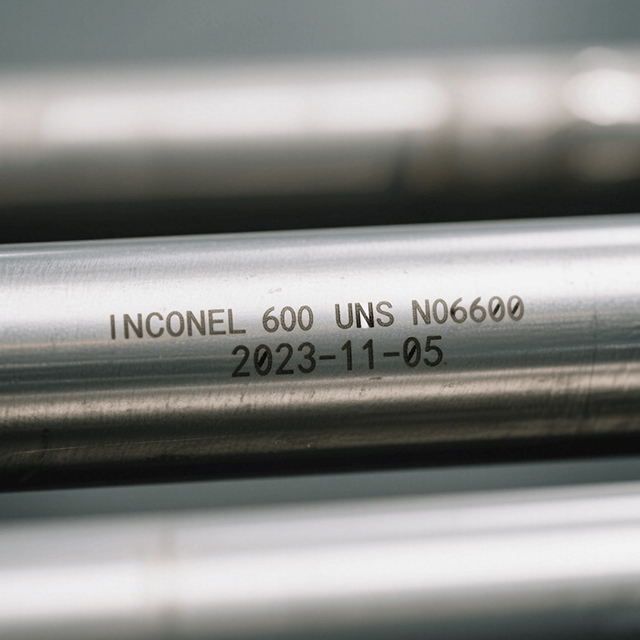
Nickel-based superalloys represent the high-end segment of Cold Drawing materials. These alloys are engineered to maintain exceptional strength, oxidation resistance, and structural stability under extreme temperatures and pressures. Typical applications include aerospace engines, nuclear heat exchangers, high-pressure tubing systems, and advanced chemical processing equipment.

Cold Drawing of nickel-based alloys requires strict process control due to their high flow stress and rapid work hardening rate. Drawing forces are significantly higher than those used for carbon steel or aluminum alloys. As a result, multi-pass Cold Drawing is standard practice. Each reduction step is carefully designed to prevent surface tearing and internal micro-cracking.
Despite the higher processing difficulty, Cold Drawing delivers substantial benefits for nickel alloys. It improves dimensional precision, enhances surface finish, and increases strength through strain hardening. For aerospace springs and control wires, Cold Drawing is often the primary strengthening method before final aging heat treatment. In high-pressure tubing, Cold Drawing ensures uniform wall thickness and exceptional burst resistance.
From a cost perspective, Cold Drawing reduces the need for heavy machining of expensive nickel alloy stock. This makes it an essential process for manufacturers seeking to balance performance with production efficiency in high-value industries.
Aluminum alloys are widely Cold Drawn for lightweight structural and electrical applications. Their relatively low flow stress, good ductility, and corrosion resistance make them well suited for continuous drawing processes. Compared with steel, aluminum alloys require lower drawing force and generate less die wear, which improves production efficiency.
Cold-drawn aluminum tubes are commonly used in transportation systems, heat exchangers, hydraulic lines, and electronic housings. Cold Drawing improves dimensional accuracy and surface appearance, which is especially attractive for visible components and consumer products. Lightweight frames, cooling systems, and precision profiles all benefit from the clean geometry produced by Cold Drawing.
In addition to tubes, Cold Drawing plays an important role in aluminum wire production. Electrical conductors, battery connectors, and lightweight bus bars rely on Cold Drawing to achieve consistent diameter and stable conductivity. Since aluminum work hardens relatively slowly compared with steel, larger reductions per pass are possible without excessive cracking risk.
Cold Drawing also allows aluminum alloys to achieve improved surface brightness, reducing the need for deep polishing before anodizing or coating. This further enhances aesthetic quality and corrosion resistance in finished products.
Copper and brass are among the most draw-able metals in industrial production. Their excellent ductility allows extreme cross-section reductions without fracture, which makes them ideal for fine wire and thin-wall tube manufacturing. Cold Drawing is the dominant method for producing electrical copper wires, power cables, winding conductors, and communication lines.
Cold-drawn copper wire combines high electrical conductivity with improved tensile strength. As drawing passes increase, strength rises while conductivity remains within acceptable limits for electrical transmission. This balance is essential for motors, transformers, and power distribution systems.
Brass, which is mainly an alloy of copper and zinc, retains good draw-ability while offering improved mechanical strength and corrosion resistance. Cold-drawn brass tubes are widely used in plumbing systems, heat exchangers, radiators, and cooling circuits. The precise inner diameter control achieved by Cold Drawing helps regulate fluid flow and heat transfer efficiency.
Cold Drawing also improves surface smoothness for both copper and brass products. This reduces friction losses in fluid systems and minimizes contact resistance in electrical connectors. As a result, Cold Drawing is considered a core process for both energy transmission and thermal management industries.
Titanium alloys and other special alloys occupy a highly specialized segment of Cold Drawing applications. These materials combine outstanding strength-to-weight ratio, corrosion resistance, and biocompatibility. However, their Cold Drawing behavior is more sensitive than that of steel or aluminum, requiring very strict control of die geometry, lubrication, and reduction rate.
Cold-drawn titanium fasteners are widely used in aerospace structures where weight reduction and fatigue resistance are critical. In biomedical fields, cold-drawn titanium wires and rods serve orthopedic implants, surgical instruments, and dental components. Cold Drawing enhances fatigue performance and surface consistency, which directly affects long-term implant reliability.
In chemical processing industries, special corrosion-resistant alloys such as titanium-nickel blends and high-performance stainless variants are Cold Drawn into precision tubes and profiles. These materials must maintain structural integrity under aggressive chemical exposure and cyclic pressure loading.
Due to high raw material cost, Cold Drawing is especially valuable for special alloys. It minimizes waste while delivering superior geometric consistency, allowing manufacturers to extract maximum performance per unit mass of material.
Material | Core Advantage | Typical Use |
Carbon Steel | Cost + strength | Shafts, fasteners |
Stainless Steel | Corrosion resistance | Medical, food |
Nickel Alloy | High temp strength | Aerospace tubing |
Aluminum Alloy | Lightweight | Transport frames |
Copper | Electrical conductivity | Power cables |
Titanium | Strength-to-weight | Implants, aircraft |
Cold-drawn bars hold accurate geometry and smooth surfaces. Diameters below 50 mm are almost always Cold Drawn. They serve spindles, guide rods, and threaded parts.
Cold Drawing controls both outer diameter and wall thickness. Mandrels regulate inner surfaces. It produces seamless tubes with high pressure resistance and fine internal finish.
All precision wires rely on Cold Drawing. Smaller wire diameter requires more drawing passes. As draw count increases, tensile strength rises sharply. Heat treatment customizes final hardness.
Cold Rolling controls thickness through compression rolls. Cold Drawing controls diameter through die restriction. Cold Drawing delivers higher dimensional consistency in long products.
Cold Drawing raises tensile strength more aggressively than Cold Rolling due to uniaxial strain. Cold Rolling distributes strain across thickness.
Cold Rolling offers excellent flatness. Cold Drawing offers brighter surfaces for round profiles.
Application Need | Preferred Process |
Long bars and wires | Cold Drawing |
Sheets and plates | Cold Rolling |
High strength rods | Cold Drawing |
Flat coils | Cold Rolling |
Cold Drawing is not just a forming method, but a precision control system for size, strength, and surface quality. It reshapes how metals perform in real applications, from structural parts to fine wires.
Material choice drives the final result. Carbon steel, stainless steel, nickel alloys, aluminum, copper, and titanium each respond differently to Cold Drawing, shaping strength, corrosion resistance, and service life.
Shanghai Bozhong Metal Group Co., Ltd. provides high-quality cold-drawn products with stable performance and reliable value for industrial users.
A: Cold Drawing is a room-temperature metal forming process that reduces size through a die. Cold Drawing improves strength, accuracy, and surface finish.
A: Cold Drawing suits carbon steel, stainless steel, nickel alloys, aluminum, copper, and titanium. Cold Drawing works best on ductile, work-hardening metals.
A: Cold Drawing offers higher precision and smoother surfaces. Cold Drawing also increases strength without heat.
A: Cold Drawing cuts machining time and scrap. Cold Drawing lowers total production cost.
A: Cold Drawing may cause cracks if force is too high. Cold Drawing also reduces ductility without heat treatment.


