
English 
Room501, Building32, No. 518 Xinzhuan Highway, Songjiang District, Shanghai, China 201612
Views: 0 Author: Site Editor Publish Time: 2026-09-09 Origin: Site


Material failure in highly corrosive or high-temperature environments leads to catastrophic downtime, safety hazards, and severe financial loss. Engineering and procurement teams frequently face overlapping specifications when evaluating nickel-based superalloys. Choosing between Inconel 625 and Hastelloy C276 requires navigating complex trade-offs between oxidation resistance, reduction resistance, and lifecycle longevity.
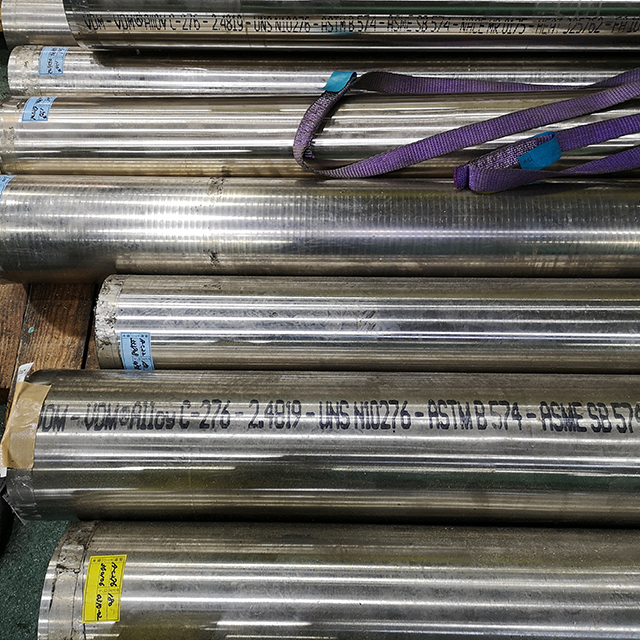
We must resolve common industry nomenclature confusion upfront. Alloy C276, Inconel C276, and Hastelloy C276 all refer to the exact same unified numbering system (UNS N10276). This clarification ensures accurate material sourcing across global supply chains. This guide provides an evidence-based, metallurgical comparison of Inconel 625 and UNS N10276, establishing clear evaluation criteria for chemical processing, marine engineering, and high-stress industrial applications.
Compositional Divergence: Inconel 625 relies on higher chromium content for superior oxidation resistance, while Hastelloy C276 utilizes elevated molybdenum and tungsten for unmatched performance in reducing environments.
Acid Handling: Hastelloy C276 significantly outperforms Inconel 625 in hydrochloric acid (HCl) and sulfuric acid, particularly at higher concentrations and temperatures.
Thermal Performance: Both alloys maintain structural integrity at extreme temperatures, but Inconel 625 offers slight advantages in specific high-temperature fatigue scenarios up to 1000°C.
Cost vs. Risk: Hastelloy C276 typically carries a higher raw material cost; however, specifying Inconel 625 in severe reducing environments risks premature localized corrosion and higher long-term replacement costs.
Table of Contents
Understanding how elemental makeup dictates environmental suitability establishes your mechanical baseline. The atomic structure of these superalloys determines their physical limits. You must analyze the chemical matrix to predict long-term performance in the field. Small shifts in elemental percentages drastically alter how the metal behaves under stress and chemical attack.
Alloy Element | Inconel 625 (UNS N06625) | Hastelloy C276 (UNS N10276) |
|---|---|---|
Nickel (Ni) | 58.0% min | Balance (approx. 57%) |
Chromium (Cr) | 20.0 - 23.0% | 14.5 - 16.5% |
Molybdenum (Mo) | 8.0 - 10.0% | 15.0 - 17.0% |
Tungsten (W) | None | 3.0 - 4.5% |
Iron (Fe) | 5.0% max | 4.0 - 7.0% |
Niobium (Nb) | 3.15 - 4.15% | None |
Inconel 625 utilizes a robust nickel-chromium-molybdenum matrix. This specific combination provides exceptional fatigue strength. The alloy relies heavily on niobium additions. Niobium interacts with the molybdenum to stiffen the alloy matrix. This creates solid-solution stiffening. The differing atomic radii of these elements create strain within the crystal lattice, locking the atomic planes in place. The material achieves high strength without requiring complex precipitation hardening treatments. You can deploy it immediately after standard annealing.
The high chromium content defines its primary defense mechanism. Chromium levels reach up to 23 percent. This high concentration directly impacts the formation of protective oxide layers. The alloy creates a tenacious, passive film upon exposure to oxygen. This film prevents further degradation in highly oxidizing environments. It shields the underlying metal from aggressive chemical attacks, regenerating almost instantly if the surface gets scratched or machined.
UNS N10276 features a highly specialized nickel-molybdenum-chromium matrix. Engineers add significant amounts of tungsten to this blend. The high molybdenum content reaches 17 percent. Tungsten levels hover around 4 percent. These heavy elements fundamentally alter the alloy's behavior in harsh chemical media. They provide unparalleled resistance to localized corrosion mechanisms, specifically blocking the propagation of pits and crevices.
Metallurgists carefully control the carbon and silicon limits during the melting process. Low carbon prevents grain boundary precipitation during welding operations. When you weld standard austenitic stainless steels, carbon migrates to the grain boundaries and forms chromium carbides, leaving the surrounding area depleted of chromium and vulnerable to attack. UNS N10276 prevents this sensitization. This preserves the corrosion resistance in the heat-affected zone. You do not need to perform post-weld heat treatments. The material maintains its structural integrity directly out of the fabrication shop.

You must map alloy capabilities against specific chemical exposures. This prevents costly over-engineering and stops premature catastrophic failure. Selecting the wrong matrix leads to rapid material degradation. Field engineers often rely on historical failure data, but understanding the exact chemical mechanisms allows for proactive material selection.
Inconel 625 demonstrates clear superiority in oxidizing media. It handles nitric acid and oxidizing salts with ease. The higher chromium threshold provides this distinct advantage. The passive oxide layer regenerates quickly if damaged by abrasive flow. Engineers specify this material for processes involving strong oxidizing agents where maintaining a pristine surface finish dictates operational success.
UNS N10276 faces specific limitations in strong oxidizing environments. The high molybdenum content becomes a liability here. Molybdenum does not form stable oxides under severe oxidizing conditions. The material degrades faster than high-chromium alternatives. You should avoid specifying this alloy for hot, concentrated nitric acid applications. The surface will actively dissolve, leading to rapid wall thinning in piping systems and pressure vessels.
UNS N10276 dominates reducing media applications. It significantly outperforms Inconel 625 in aggressive acids. Hydrochloric acid (HCl) destroys standard stainless steels rapidly. UNS N10276 withstands HCl at varying concentrations and temperatures. Inconel 625 begins to fail as acid concentration increases. The heavy molybdenum and tungsten additions block the reducing chemical reactions, preventing the acid from breaking down the metallic bonds.
Sulfuric acid performance follows a similar pattern. UNS N10276 handles hot sulfuric acid far better than its competitors. These thresholds remain critical when specifying high-risk components. Fasteners and bolts in acid-rich environments demand precise material selection. A failed bolt causes catastrophic joint separation, blowing gaskets and releasing toxic media. UNS N10276 also resists wet chlorine gas and hypochlorite solutions effectively. It prevents the rapid pitting associated with these volatile chemicals.
Engineers calculate the Pitting Resistance Equivalent Number (PREN) to evaluate localized corrosion. The formula generally follows PREN = %Cr + 3.3(%Mo) + 16(%N). UNS N10276 boasts a significantly higher PREN due to its massive molybdenum content. It stops pitting before microscopic cavities can form. Both alloys exhibit excellent resistance to chloride-induced stress corrosion cracking. The high nickel base prevents the transgranular cracking seen in standard 300-series austenitic steels.
Nuance exists in stagnant versus flowing seawater applications. Inconel 625 performs exceptionally well in flowing seawater. The oxygen flow maintains its passive layer. Stagnant seawater creates oxygen-deprived crevices under barnacles or O-rings. UNS N10276 handles these stagnant, oxygen-starved crevices better. Its resistance relies less on oxygen-dependent passive films, making it the superior choice for offshore platform components submerged in mud or stagnant tidal zones.
You must translate tensile strength and thermal limits into operational safety margins. Heat alters the crystalline structure of metals. Understanding these changes prevents unexpected mechanical failures under load. Thermal expansion and phase stability dictate how these alloys perform during continuous high-temperature operations.
Both superalloys offer impressive baseline mechanical properties at room temperature. Yield strengths typically exceed 60 ksi. Tensile strengths routinely surpass 100 ksi. They retain significant strength from cryogenic temperatures up to 1000°C (1832°F). Inconel 625 excels in specific high-temperature fatigue scenarios. The niobium stiffening mechanism remains highly stable under cyclical thermal loads, preventing the metal from fatiguing during rapid heating and cooling cycles.
UNS N10276 also maintains excellent high-temperature strength. It handles thermal shock well. However, Inconel 625 generally provides a slight edge in pure mechanical strength at elevated temperatures. Aerospace engineers leverage this strength-to-weight ratio for critical engine components. They require materials that will not deform under massive thrust loads while operating at red-heat temperatures.
Property | Temperature | Inconel 625 | Hastelloy C276 |
|---|---|---|---|
Yield Strength (ksi) | Room Temp (70°F) | 70 | 60 |
Tensile Strength (ksi) | Room Temp (70°F) | 130 | 110 |
Yield Strength (ksi) | 1600°F (871°C) | 35 | 28 |
Tensile Strength (ksi) | 1600°F (871°C) | 45 | 40 |
Long-term structural stability under continuous high-heat stress defines creep resistance. Metals slowly deform when subjected to constant loads at high temperatures. Both alloys resist this deformation effectively. The solid-solution matrix prevents the atomic slip that causes creep. The large atoms of molybdenum and niobium act like speed bumps within the crystal lattice, stopping the planes from sliding past one another.
You must consider metallurgical phase stability. Prolonged exposure to intermediate temperatures poses severe risks. Operating between 650°C and 870°C can cause embrittlement in UNS N10276. Harmful intermetallic phases like mu-phase and sigma-phase precipitate at these temperatures. This drastically reduces room-temperature ductility. If a plant operator runs a vessel at 750°C for a year, the metal might crack during a cold shutdown. Inconel 625 also experiences some embrittlement, but the precipitation kinetics differ. You must evaluate your continuous operating temperature carefully to avoid these dead zones.
Identifying manufacturing bottlenecks saves time and money. You must implement specific mitigation strategies during fabrication. Superalloys require specialized handling compared to standard carbon steels. Shop floors must adapt their standard operating procedures to handle the sluggish weld pools and rapid work-hardening characteristics of high-nickel alloys.
UNS N10276 offers excellent as-welded suitability. The strict control of carbon and silicon prevents grain boundary precipitation. This preserves corrosion resistance in the heat-affected zone. You can weld large vessels without requiring massive heat treatment furnaces. This drastically reduces fabrication timelines for chemical processing equipment. Welders must use wider joint designs, typically 37.5 to 40-degree bevels, because the molten nickel pool does not flow or wet out like carbon steel.
Inconel 625 provides outstanding overall weldability. Fabricators frequently use it as a versatile filler metal. It works perfectly for dissimilar alloy welding. You can join standard stainless steel to high-nickel alloys using Inconel 625 wire. Both alloys require strict interpass temperature controls. You must keep the weld zone below 93°C (200°F) between passes to prevent micro-fissuring. Welders must use high-purity argon or argon-helium shielding gases. This prevents atmospheric contamination of the molten weld pool. Any oxygen or nitrogen pulled into the weld will cause severe porosity.
Both superalloys exhibit extreme work-hardening rates. The metal becomes significantly harder as the cutting tool deforms it. This destroys standard high-speed steel tools rapidly. If a machinist takes a light finishing pass, the tool rubs against the hardened layer from the previous cut, shattering the insert. You must use rigid machining setups to prevent tool chatter. Vibration ruins the surface finish and destroys cutting edges instantly.
Use high-quality, positive-rake carbide or ceramic tooling for all turning and milling operations.
Maintain continuous, heavy feed rates to ensure the cutting edge stays below the work-hardened layer.
Never allow the tool to dwell or rub against the workpiece; retract the tool immediately upon completing a pass.
Apply generous amounts of sulfur-free flood coolant to dissipate the massive heat generated during cutting.
Reduce cutting speeds by at least 40% compared to standard austenitic stainless steels to preserve tool life.
You must balance upfront procurement factors against lifecycle longevity. Material selection directly impacts project timelines and maintenance schedules. Understanding market dynamics helps procurement teams forecast availability accurately and avoid specifying materials that will delay construction.
Global market fluctuations disproportionately affect superalloy availability. Molybdenum and tungsten remain highly volatile commodities. Mining disruptions or geopolitical tensions cause rapid shifts in supply. UNS N10276 contains massive amounts of these heavy elements. Therefore, securing large quantities for major infrastructure projects requires advanced planning and strong supplier relationships.
Chromium and nickel also experience market volatility. However, the global supply chains for these elements are larger and more diversified. Inconel 625 relies heavily on chromium and niobium. Its supply chain remains slightly more stable than high-molybdenum alternatives. Procurement teams must track commodity indices and secure mill runs early when planning large-scale petrochemical expansions.
You must calculate the initial material acquisition plus the fabrication labor. Then, add projected maintenance and replacement cycles. Specifying UNS N10276 in mild environments creates unnecessary resource drain. This constitutes over-engineering. If standard 316 stainless steel or Inconel 625 handles the media safely, upgrading wastes capital that could be deployed elsewhere in the facility.
Conversely, specifying Inconel 625 in severe reducing environments represents a false economy. The initial procurement seems efficient. However, premature failure drives up long-term replacement cycles. Unplanned downtime in a chemical plant causes massive production losses. You must align the alloy's capabilities directly with the environmental severity to maximize the operational lifespan of the equipment.
Reviewing practical examples clarifies material selection. Different sectors rely on specific alloys to solve unique engineering challenges. These frameworks demonstrate where each alloy serves as the industry standard and why field engineers trust them.
Engineers default to high-molybdenum alloys for reactors and heat exchangers. These vessels handle organic chlorides and acid catalysts daily. UNS N10276 safely contains aggressive chemical reactions. It prevents leaks that could cause environmental disasters. Petrochemical plants use it for piping systems transferring hot, contaminated acids. The material guarantees long-term operational safety in these volatile environments, resisting the thinning and pitting that destroys lesser alloys.
You must specify high-performance bolts in concentrated HCl environments. Using Inconel 625 fasteners here risks catastrophic joint failure. The acid eats through the threads rapidly, causing the bolt to lose torque and the flange to leak. UNS N10276 fasteners maintain their structural integrity and thread profile. Valve bodies and internal trim components also require this high-molybdenum protection. Instrumentation tubing exposed to sour gas relies on these advanced alloys to prevent dangerous ruptures under high pressure.
Aerospace exhaust systems and thrust reversers rely heavily on Inconel 625. The material withstands extreme thermal cycling and high-velocity exhaust gases. It balances strength, oxidation resistance, and weight perfectly. Marine engineers specify it for wire rope, propeller blades, and submarine propulsion shafts. The alloy resists chloride-induced pitting in flowing seawater. It maintains high fatigue strength under constant wave impacts and torque loads.
Power plants mix both alloys in their pollution control systems. Scrubbers, dampers, and ducting face highly corrosive exhaust gases. Selection depends heavily on specific sulfur compound concentrations and temperature zones. Inconel 625 handles the less aggressive, higher-temperature upper stack zones effectively. Engineers deploy UNS N10276 in the most severe quenching zones. Here, acidic condensates pool and create highly concentrated, boiling reducing environments that eat through standard metals.
Audit your facility's historical equipment failure logs to identify whether your primary corrosion mechanism is oxidizing or reducing.
Map your exact chemical media concentrations and maximum continuous operating temperatures before finalizing any material specification.
Specify maximum allowable interpass temperatures and strict shielding gas requirements in your welding procedure specifications (WPS).
Request certified Material Test Reports (MTRs) from your suppliers to verify exact molybdenum, tungsten, and chromium percentages.
Consult a third-party metallurgist to run custom corrosion coupon tests in your specific process fluid before ordering large-scale pressure vessels.
A: Yes. Both names refer to the same unified numbering system, UNS N10276. Haynes International owns the Hastelloy trademark. Special Metals owns the Inconel trademark. The chemical composition and mechanical performance remain identical regardless of the specific brand name used by the manufacturer.
A: UNS N10276 offers vastly superior resistance to hydrochloric acid. It handles higher concentrations and elevated temperatures effectively. Inconel 625 degrades rapidly in these aggressive reducing environments. Engineers mandate high-molybdenum alloys for critical fasteners and piping exposed to HCl.
A: Yes. These nickel-based superalloys share excellent metallurgical compatibility. Fabricators typically use Inconel 625 or matching filler metals for dissimilar welding operations. You must maintain strict interpass temperature controls. Proper argon shielding gases prevent contamination during the welding process.
A: Standard stainless steel relies primarily on highly available iron and chromium. High-performance superalloys require massive amounts of specialized elements like nickel, molybdenum, and tungsten. The complex vacuum melting processes and the geopolitical factors surrounding heavy metal mining create frequent supply chain shifts.
A: It maintains structural integrity up to 1000°C (1832°F) in specific environments. However, prolonged exposure to intermediate temperatures between 650°C and 870°C causes embrittlement. You must evaluate metallurgical phase stability based on your specific continuous operating temperature.
A: No. It does not rust like traditional carbon steel. It exhibits exceptional resistance to chloride-induced pitting and crevice corrosion. This makes it highly effective in harsh marine environments. It maintains a protective passive oxide layer even in continuously flowing seawater.


