
English 
Room501, Building32, No. 518 Xinzhuan Highway, Songjiang District, Shanghai, China 201612
Views: 0 Author: Site Editor Publish Time: 2026-09-09 Origin: Site


Material selection in extreme engineering environments leaves zero room for error. Aerospace, oil and gas, and chemical processing sectors demand components that survive under immense mechanical stress and aggressive chemical attacks. Specifying the wrong nickel-chromium superalloy introduces severe operational risks. While both Inconel alloys share a similar base chemistry, their distinct strengthening mechanisms dictate entirely different performance profiles. A misapplication easily leads to catastrophic mechanical yield under load or rapid structural failure due to localized corrosion.
This guide provides a comprehensive technical evaluation framework comparing Inconel 625 (UNS N06625) and Inconel 718 (UNS N07718). We examine their foundational metallurgical properties, mechanical strength limits, environmental resistance capabilities, and manufacturability constraints to drive an evidence-based specification decision.
Primary Distinction: Inconel 625 is optimized for extreme corrosion resistance, ductility, and weldability, whereas Inconel 718 is engineered for exceptional high-temperature mechanical strength and creep resistance.
Strengthening Mechanisms: Inconel 625 relies on solid-solution strengthening (niobium and molybdenum), while 718 utilizes precipitation hardening (age hardening) to achieve superior yield strength (up to 1035 MPa).
Thermal Limits: Detail that while both withstand extreme heat, their structural stability profiles under mechanical load differ significantly at elevated temperatures.
Manufacturability: 625 offers superior ductility and ease of welding; 718 presents specific machining challenges due to work hardening and requires precise heat treatment cycles.
Table of Contents
High molybdenum and niobium additions define the nickel-chromium matrix of this specific alloy. These heavy elements feature larger atomic radii than the base nickel atoms. When they enter the crystal lattice during the melting process, they physically stretch and distort the atomic structure. This internal distortion creates a powerful solid-solution strengthening effect. The distorted lattice heavily resists the movement of dislocations, which are the microscopic defects responsible for metal deformation.
This specific chemistry delivers high baseline strength naturally. You do not need complex, multi-step heat treatments to achieve the necessary mechanical properties. The material is simply annealed to relieve residual manufacturing stresses. This straightforward metallurgical structure yields exceptionally high ductility and excellent overall fabricability. Components manufactured from this grade are immediately ready for deployment in highly corrosive environments. Engineers frequently specify this solid-solution grade when fabrication speed, complex forming requirements, and environmental resistance outweigh the need for absolute maximum yield strength.
Nominal Chemical Composition Comparison (wt %) | ||
Element | UNS N06625 | UNS N07718 |
|---|---|---|
Nickel (Ni) | 58.0 min | 50.0 - 55.0 |
Chromium (Cr) | 20.0 - 23.0 | 17.0 - 21.0 |
Molybdenum (Mo) | 8.0 - 10.0 | 2.8 - 3.3 |
Niobium (Nb) | 3.15 - 4.15 | 4.75 - 5.50 |
Titanium (Ti) | 0.40 max | 0.65 - 1.15 |
Aluminum (Al) | 0.40 max | 0.20 - 0.80 |
Iron (Fe) | 5.0 max | Balance |
This grade takes a completely different metallurgical approach to achieve structural integrity. The precise addition of titanium, aluminum, and niobium enables a process called precipitation hardening. During controlled thermal processing, these specific elements precipitate out of the solid solution to form microscopic intermetallic compounds. These formations are known as gamma prime and gamma double-prime precipitates. These microscopic disc-shaped structures embed themselves within the crystal lattice, effectively locking the atomic planes in place and preventing dislocation glide entirely.
You must perform a strict aging process to unlock the maximum mechanical properties of this alloy. This involves a high-temperature solution anneal followed by precise precipitation hardening cycles that take over twenty hours to complete. The trade-off for this complex processing is clear. You gain a massive, undeniable increase in baseline yield and tensile strength. However, you also face significantly increased complexity in processing, machining, and thermal management during the manufacturing phase.
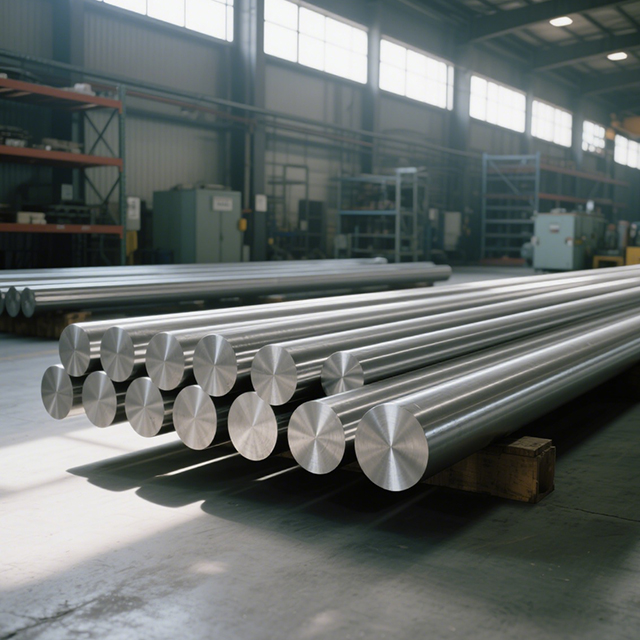
Standard AMS specifications highlight the dramatic strength differences between these two superalloys. In its standard annealed condition, the 625 variant offers a respectable yield strength typically ranging from 414 to 450 MPa. Its ultimate tensile strength hovers around 827 MPa. It handles moderate structural loads effectively while maintaining flexibility. This makes it ideal for sheet metal applications, bellows, and expansion joints where movement is expected.
Conversely, the 718 variant dominates in pure load-bearing capacity. In its fully aged and precipitation-hardened condition, its yield strength frequently exceeds 1035 to 1150 MPa. The ultimate tensile strength pushes past 1375 MPa. This massive strength advantage makes the aged alloy the default choice for highly stressed mechanical components, rotating shafts, and high-pressure fasteners. You specify this material when structural deflection or mechanical yielding would cause immediate catastrophic failure.
Typical Room Temperature Mechanical Properties | ||
Property | UNS N06625 (Annealed) | UNS N07718 (Aged) |
|---|---|---|
Yield Strength (0.2% Offset) | 414 MPa (60 ksi) | 1034 MPa (150 ksi) |
Ultimate Tensile Strength | 827 MPa (120 ksi) | 1375 MPa (200 ksi) |
Elongation in 2 inches | 42% | 15% - 20% |
Hardness | ~90 HRB | ~36 HRC |
Strength and toughness share a strict inverse relationship in superalloy metallurgy. As yield strength increases through precipitation hardening, ductility typically decreases. The solid-solution matrix of the 625 grade retains exceptional ductility and impact toughness across a massive temperature range. It routinely demonstrates elongation values exceeding 40%. It absorbs sudden, violent impacts without fracturing. This characteristic proves vital at cryogenic temperatures, down to liquid nitrogen levels, where many high-strength metals become dangerously brittle.
The rigid, heavily aged structure of the 718 grade cannot match this level of impact absorption. While it retains acceptable toughness for many aerospace applications, its elongation values typically drop to around 15% to 20% in the fully hardened state. It behaves much more stiffly under dynamic loading. If your application involves unpredictable dynamic loads, explosive decompression risks, or extreme cryogenic cold, prioritize the ductility of the solid-solution alloy over raw tensile strength.
Creep resistance defines how a material resists slow, permanent deformation under prolonged high-temperature exposure. Heavy mechanical loads accelerate this deformation, causing parts to stretch over time. The gamma double-prime precipitates in the 718 grade provide extraordinary creep resistance. They physically pin the grain boundaries, preventing the atomic planes from sliding past each other even when subjected to massive centrifugal or axial forces at high heat.
This specific structural stability makes the precipitation-hardened alloy the absolute industry standard for high-stress, high-temperature rotating applications. Gas turbine disks, high-pressure compressor blades, and rocket engine turbopumps rely entirely on this specific resistance. These components must maintain exact dimensional tolerances over thousands of operating hours. Any creep deformation in a turbine disk leads to blade rub against the engine casing, resulting in catastrophic engine failure.
Both alloys survive extreme heat, but their structural stability profiles differ drastically based on the applied load. The 625 grade maintains excellent oxidation resistance up to 980°C. It handles non-load-bearing thermal cycling beautifully. You will frequently see it used in exhaust ducts, flare stacks, and heat shields where it faces extreme heat but carries very little physical weight.
The 718 grade has a strict thermal ceiling for mechanical stability. Its precipitation-hardened structure begins to over-age at highly elevated temperatures. Under heavy mechanical load, it loses significant strength between 650°C and 700°C. At these temperatures, the strengthening gamma double-prime precipitates begin transforming into a stable, needle-like delta phase. This delta phase provides zero strengthening benefit. Pushing the aged alloy beyond this 700°C window causes rapid, irreversible mechanical degradation.
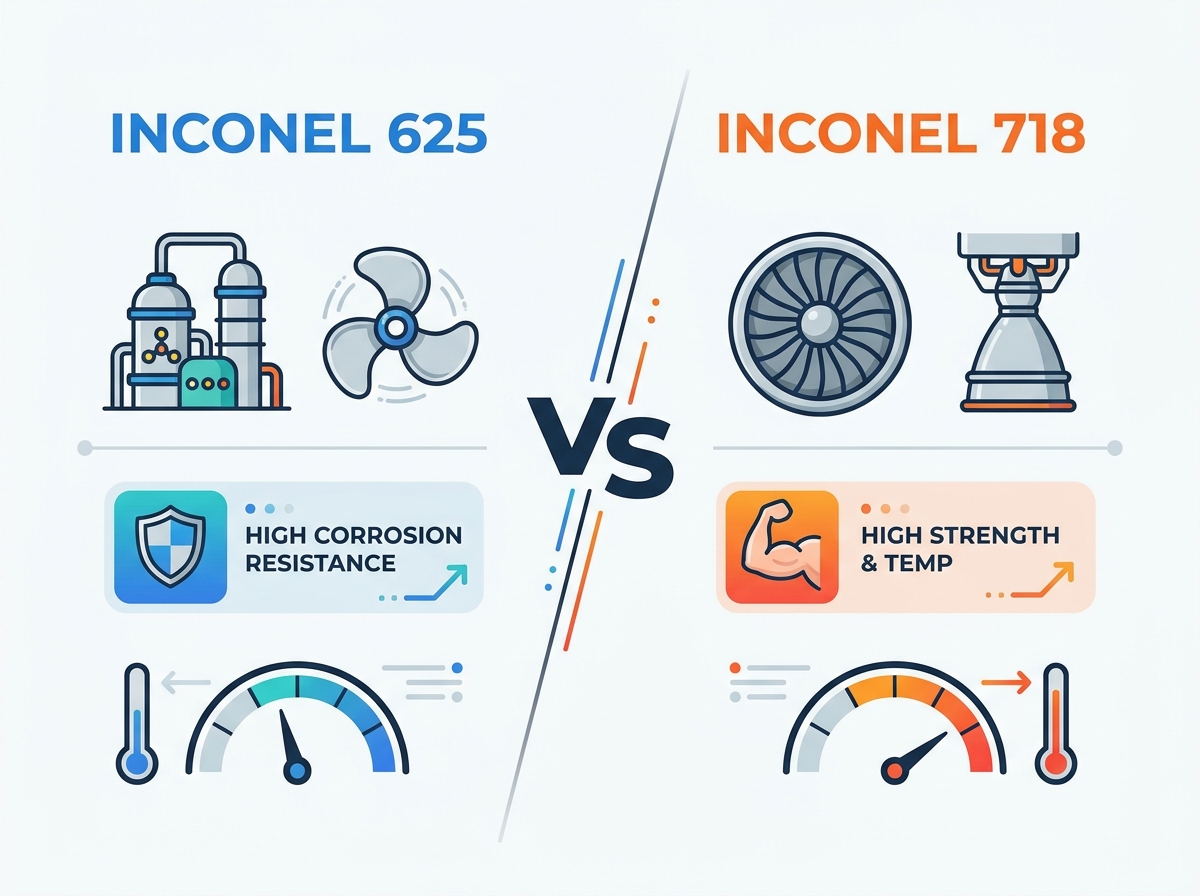
Marine environments destroy standard industrial metals through relentless chloride-ion attacks. The 625 grade offers near-immunity to chloride-ion stress-corrosion cracking. It heavily resists pitting and crevice corrosion even in stagnant, warm seawater. The high molybdenum content acts as a powerful chemical shield. This pushes its Pitting Resistance Equivalent Number exceptionally high, making it a premium choice for aggressive aqueous environments.
The 718 grade provides good general corrosion resistance due to its nickel and chromium base. However, it is generally outperformed in severe marine or subsea environments. Its lower molybdenum content makes it more susceptible to localized pitting in oxygen-starved crevices underwater. Engineers consistently select the solid-solution alloy for offshore splash zones, submerged naval components, and critical seawater cooling loops where long-term survivability is mandatory.
Chemical processing and deep-well oil extraction expose metals to highly aggressive acidic compounds. The 625 grade demonstrates superior performance in highly acidic environments. It withstands varying concentrations of sulfuric, hydrochloric, and phosphoric acids effectively. The lack of complex precipitates in its microstructure means there are fewer localized galvanic cells to initiate corrosive attacks.
Both alloys see heavy use in sour gas applications within the oil and gas sector. They comply with strict NACE MR0175 / ISO 15156 standards for sour service environments. However, the 625 variant handles higher concentrations of hydrogen sulfide and higher bottom-hole temperatures without suffering from sulfide stress cracking. When specifying downhole equipment for highly sour wells, engineers must carefully calculate the exact partial pressure of H2S and the operating temperature to determine which alloy meets the NACE threshold.
Welding superalloys often introduces severe cracking risks in the heat-affected zone. The 625 grade excels in this specific manufacturing discipline. It strongly resists post-weld cracking and micro-fissuring. You can weld it in the standard annealed condition without requiring complex post-weld heat treatment to restore its properties. It maintains its full corrosion resistance and mechanical integrity immediately after the welding process concludes.
Industry professionals frequently use this grade as a weld overlay or cladding material. It serves as an exceptional filler metal for joining dissimilar metals, such as welding stainless steel to carbon steel or joining different nickel alloys. The weld pool is notoriously sluggish, requiring skilled operators and specific shielding gas mixtures, but the resulting joint is incredibly robust. This fabricability significantly accelerates large-scale construction projects in the petrochemical and offshore sectors.
Machining superalloys requires highly rigid setups, specialized tooling, and exact programming knowledge. These materials feature high shear strength and low thermal conductivity. During machining, the heat generated does not transfer into the metal chip; instead, it transfers directly into the cutting tool. The 718 grade presents severe machining challenges. It work-hardens rapidly ahead of the cutting tool. If a tool rubs the surface without cutting, the material instantly hardens, destroying the insert on the next pass.
You must implement specific mitigation strategies to machine these alloys successfully. Use highly rigid machine tools and short tool holders to prevent vibration and chatter. Apply positive rake angles on carbide or ceramic inserts to shear the material cleanly. Maintain low, consistent cutting speeds while ensuring the feed rate is high enough to stay under the work-hardened layer. High-pressure coolant delivery directed precisely at the cutting zone is mandatory to prevent catastrophic tool failure.
General Machining Guidelines (Turning Operations) | ||
Parameter | UNS N06625 (Annealed) | UNS N07718 (Aged) |
|---|---|---|
Cutting Speed (SFM) | 80 - 120 | 40 - 80 |
Feed Rate (IPR) | 0.008 - 0.015 | 0.006 - 0.012 |
Tool Material | Carbide (TiAlN coated) | Carbide or Ceramic |
Coolant | High-pressure flood | High-pressure directed |
Thermal processing dictates the final manufacturing timeline and introduces dimensional risks. The 625 grade utilizes a straightforward annealing process. Parts are heated to around 980°C to 1040°C, held to ensure uniform temperature, and rapidly quenched. This relieves stresses induced by cold working or welding. It requires minimal thermal management during fabrication, keeping production schedules predictable.
The 718 grade demands strict, multi-step thermal cycles. You must follow specific AMS specifications. A typical cycle involves a solution anneal at 980°C, followed by a rapid quench. The part then enters the aging furnace at 718°C for eight hours. The furnace then cools slowly to 621°C, where the part holds for another eight hours before final air cooling. This process takes over twenty hours and requires precise atmospheric control to prevent scaling. Complex geometries risk severe distortion during these long heat treatment cycles. You must design parts with adequate machining allowances to correct post-treatment warping.
Select this solid-solution alloy when your primary engineering drivers are maximum corrosion resistance, high ductility, and excellent fabricability. It thrives in environments that destroy lesser metals through chemical attack or extreme thermal cycling without massive mechanical loads. Common applications include:
Chemical processing equipment handling aggressive acids and corrosive catalysts.
Marine exhaust systems exposed to hot, corrosive saltwater spray.
Submerged seawater components, offshore piping, and heat exchanger tube sheets.
Flare stacks and chimney liners in refinery operations subjected to thermal shock.
Aerospace ducting, thrust reverser components, and bellows requiring complex forming and welding.
Weld cladding for blowout preventers and subsea manifolds to prevent localized corrosion.

Specify this precipitation-hardened alloy when your application demands absolute high-temperature mechanical strength, structural rigidity, and resistance to creep deformation. It is built for environments where physical stress and heat combine to cause mechanical failure. Primary use cases include:
Gas turbine engine parts, including rotating disks, compressor blades, and high-pressure casings.
Rocket motor casings, turbopump components, and structural aerospace mounts.
Downhole shafting, wellhead components, and safety valves in deep-well oil extraction.
High-strength cryogenic fasteners and structural supports for space exploration vehicles.
High-pressure extrusion dies and specialized hot-work tooling.
Nuclear reactor core components requiring high strength and resistance to radiation swelling.

The global industrial market supports widespread availability for both grades. You can easily source them in various standard mill forms. Bar, sheet, plate, wire, and forged block stock remain readily accessible through major international service centers. The 625 grade often sees higher demand in sheet, plate, and wire forms to support heavy fabrication and welding operations. The 718 grade dominates the round bar and billet market, supporting the extensive CNC machining required for aerospace and oilfield components. Lead times for custom forgings or non-standard diameters require careful supply chain planning, often extending several months depending on mill capacity.
Audit your operating environment to determine peak continuous temperatures and exact chloride exposure levels.
Calculate the maximum mechanical stress and creep requirements for your component to identify if precipitation hardening is mandatory.
Consult specific AMS or ASTM standards applicable to your industry sector to ensure compliance before finalizing the material grade.
Request Material Test Reports from your supplier to verify lot-specific chemistry and mechanical properties prior to manufacturing.
A: The Unified Numbering System designates the 625 alloy as UNS N06625 and the 718 alloy as UNS N07718. These specific codes ensure exact chemical composition and mechanical properties across different global manufacturers and material test reports.
A: Inconel 625 significantly outperforms 718 in both ductility and impact toughness. Its solid-solution matrix absorbs dynamic impacts and retains flexibility, making it highly preferable for dynamic loads and cryogenic applications where the rigidity of 718 becomes a liability.
A: Yes, you can join these alloys using TIG or MIG welding processes. Inconel 625 filler metal is typically used for the joint. However, you must carefully manage the heat input and consider the post-weld heat treatment requirements, as 718 is susceptible to strain-age cracking.
A: For oxidation resistance in non-load-bearing applications, it performs exceptionally well up to approximately 980°C. However, if the component must support significant structural loads, its mechanical strength drops off at lower temperatures compared to precipitation-hardened alloys.
A: It utilizes precipitation hardening. During heat treatment, additions of niobium, titanium, and aluminum form microscopic gamma prime and gamma double-prime precipitates. These structures lock the atomic lattice in place, preventing dislocation movement and massively increasing yield strength.
A: Inconel 625 is the superior choice for marine environments. Its high molybdenum content provides exceptional resistance to chloride-ion pitting and crevice corrosion in stagnant seawater, heavily outperforming 718 in long-term subsea deployments.


