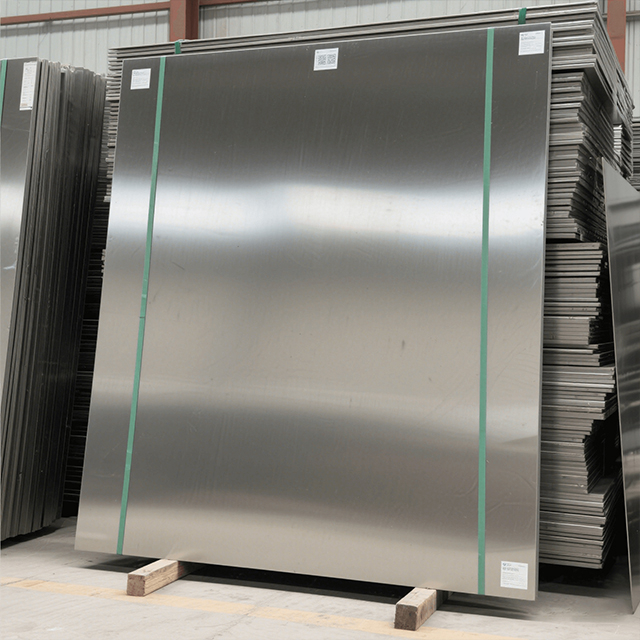
Nitronic 33 Product Introduction
Product Overview
Nitronic 33 (UNS S20330) is a high-nitrogen austenitic stainless steel engineered to deliver exceptional mechanical strength and corrosion resistance in chloride-rich environments—filling the gap between traditional stainless steels (304/316) and high-cost nickel-based alloys. Unlike high-temperature nickel-based Nicrofer 6025HT or medium-temperature Incoloy series, Nitronic 33 features a cost-effective Fe-Cr-Ni-N composition: high chromium (22-24%) for oxidation resistance, moderate nickel (3.5-5.5%) for austenite stabilization, and key nitrogen addition (0.15-0.30%) for solid-solution strengthening. This design enables it to achieve yield strength nearly double that of 316L (≥485 MPa vs. 316L’s ≥205 MPa) without heat treatment, while retaining excellent resistance to pitting, crevice corrosion, and stress corrosion cracking (SCC) in chloride media (e.g., seawater, brine). It operates stably up to 480℃, making it ideal for chemical processing, marine engineering, and food equipment—where “high strength + chloride corrosion resistance + cost-effectiveness” are critical.
International Grade Comparison
Standard System | Grade | Description |
ASTM (USA) | S20330 | UNS Unified Numbering System Grade (exclusive for Nitronic 33) |
EN (EU) | X2CrNiN23-4 | EN 10088-1 Standard Grade (high-nitrogen austenitic stainless steel) |
JIS (Japan) | SUS20330 | JIS G4303 Standard Grade (equivalent to Nitronic 33) |
DIN (Germany) | 1.4362 | DIN 17440 Standard Grade (high-strength chloride-resistant stainless steel) |
ISO (International) | FeCr23Ni4N | ISO 15510 Standard Grade (nitrogen-strengthened austenitic stainless steel) |
Physical Properties (Room Temperature & Corrosion-Critical Highlights)
Property Indicator | Typical Value (Room Temp) | Unit | Performance Advantage (Chloride Environments) |
Tensile Strength | ≥700 | MPa | 40% higher than 316L (≥515 MPa); retains ≥550 MPa at 400℃ |
Yield Strength (0.2% Offset) | ≥485 | MPa | 2.3x higher than 316L (≥205 MPa); no heat treatment required |
Elongation (50mm Gauge Length) | ≥30 | % | Higher ductility than martensitic stainless steels (e.g., 410: ≥15%) |
Pitting Resistance Equivalent (PREN) | ≥30 | — | Superior to 316L (PREN≈24); resists pitting in 10% NaCl solution (room temp) |
Density | 7.85 | g/cm³ | Same as traditional stainless steels; lower than nickel-based alloys |
Melting Point | 1420-1450 | ℃ | Stable up to maximum service temperature (480℃) |
Magnetic Property | Non-magnetic | — | Suitable for electronic/medical equipment sensitive to magnetism |
Chemical Composition (Mass Fraction, Strength & Corrosion-Optimized)
Chemical Symbol | Composition Range (%) | Role in Performance |
Fe | Balance | Matrix base; ensures cost-effectiveness vs. nickel-based alloys |
Cr | 22.0-24.0 | Forms dense Cr₂O₃ oxide film; core anti-oxidation/corrosion element |
Ni | 3.5-5.5 | Stabilizes austenitic matrix; enhances toughness and chloride resistance |
N | 0.15-0.30 | Core strength additive; solid-solution strengthens matrix (no precipitation hardening needed); boosts PREN |
Mn | ≤2.0 | Assists nitrogen dissolution; improves hot workability |
Si | ≤1.0 | Refines oxide film; reduces welding defects |
Mo | ≤0.5 | Supplementary enhancement of pitting resistance |
C | ≤0.03 | Ultra-low content prevents carbide precipitation; avoids intergranular corrosion |
S/P | ≤0.015/≤0.03 | Controls impurities to prevent brittleness and corrosion initiation |
Product Characteristics
1.High Strength Without Heat Treatment: Nitrogen-induced solid-solution strengthening delivers yield strength ≥485 MPa (2.3x 316L) and tensile strength ≥700 MPa—eliminating the need for quenching/tempering, simplifying production;
2.Excellent Chloride Corrosion Resistance: PREN ≥30 enables resistance to pitting, crevice corrosion, and SCC in seawater, brine, and chloride-containing acids (e.g., 5% HCl at room temp)—outperforming 316L in marine and chemical environments;
3.Good Ductility & Processability: Elongation ≥30% allows cold forming (bending, deep drawing, rolling) and precision machining; compatible with TIG/MIG welding (low nitrogen loss with proper shielding);
4.Cost-Effective Alternative: Nickel content (3.5-5.5%) is 1/3-1/2 that of Incoloy 825 (38-47% Ni), reducing material cost by 30-50% while maintaining comparable chloride resistance;
5.Stable Mid-Temperature Performance: Retains 80% of room-temperature strength at 400℃; no phase transformation (remains austenitic) up to 480℃, avoiding brittleness in cyclic heating.
Metallographic Structure
At room temperature, Nitronic 33 features a uniform face-centered cubic (FCC) austenitic matrix with ASTM grain size 5-8 grades. Nitrogen atoms are fully dissolved in the Fe-Cr-Ni lattice—acting as “interstitial strengtheners” to enhance mechanical strength without forming harmful precipitates. Ultra-low carbon content prevents carbide (Cr₂₃C₆) precipitation at grain boundaries, even after long-term exposure to 400℃, avoiding intergranular corrosion. No martensitic transformation occurs during cold working or temperature cycling, ensuring consistent non-magnetic properties and structural stability.
Product Forms and Executive Standards
Product Form | Main International Executive Standards | Application Reference |
Plates/Sheets | ASTM A240/A480, EN 10088-2 | Chemical tank liners, marine platform decks, food processing equipment panels |
Seamless Pipes/Tubes | ASTM A312/A790, EN 10216-5 | Seawater cooling pipelines, chloride solution transport tubes, desalination plant pipes |
Bars/Forgings | ASTM A479/A564, EN 10269 | Valve bodies, pump shafts, marine fasteners (high torque + corrosion resistance) |
Wires/Rods | ASTM A580, EN 10250-3 | Welding filler wires, precision springs (corrosive environments), mesh screens |
Sheets/Strips | ASTM A666, EN 10088-2 | Thin-walled heat exchanger plates, packaging for corrosive materials |