
English 
Room501, Building32, No. 518 Xinzhuan Highway, Songjiang District, Shanghai, China 201612
Views: 0 Author: Site Editor Publish Time: 2026-09-09 Origin: Site


Material selection dictates component performance, manufacturing viability, and lifecycle longevity. Engineering and procurement teams frequently face a bottleneck when specifying structural materials. You must balance the extreme tensile strength required for high-stress applications against the realities of machining limits, weldability, and corrosion resistance. Selecting the wrong alloy leads to premature mechanical failure, inflated fabrication timelines, or severe environmental degradation.
This guide provides an evidence-based evaluation of 6061 and 7075 alloys. We detail their chemical compositions, mechanical properties, and processing trade-offs to facilitate precise, risk-averse material selection. Understanding the distinct metallurgical behaviors of these two prevalent grades ensures your next project meets structural demands without compromising manufacturability. You will learn exactly how to align load requirements, environmental exposure, and fabrication methods with the correct alloy profile.
Strength Disparity: 7075 aluminum offers up to 85% greater tensile strength than 6061 (approx. 503 MPa vs. 276 MPa yield strength), enabling thinner wall sections and lighter overall assemblies in aerospace and high-stress applications.
Manufacturing Realities: 6061 is highly versatile, offering superior weldability, formability, and ease of machining. 7075 is notoriously difficult to weld and accelerates tool wear during CNC machining, though it yields a superior surface finish.
Environmental Resilience: 6061 provides better baseline corrosion resistance, whereas 7075 requires specific surface treatments or cladding when exposed to harsh environmental conditions.
Cost-to-Performance Ratio: While 7075 commands a premium in both raw material cost and machining time, it prevents catastrophic failure in load-bearing use cases where 6061 would require over-engineering and added bulk.
Table of Contents
Establishing baseline yield and tensile strength is mandatory to prevent plastic deformation under operational loads. Yield strength determines the maximum stress a material can endure before it permanently deforms. In structural engineering, exceeding this limit compromises the dimensional accuracy and safety of the entire assembly. When designing load-bearing components, you must calculate the maximum anticipated forces. This includes static loads, dynamic impacts, and vibrational stress. Selecting an alloy with an inadequate yield threshold forces you to increase wall thickness. That directly conflicts with weight optimization goals and adds unnecessary bulk to the final product.
Consider a suspension control arm on an off-road vehicle. The component experiences severe, unpredictable shock loads. If the yield strength is too low, a heavy impact will bend the arm, throwing off the vehicle's alignment and potentially causing a catastrophic failure at speed. Engineers must map out these peak stress events and select a material that remains entirely within its elastic deformation zone during the worst-case scenario.
Your shop's fabrication capabilities dictate which alloy series is viable for production. CNC machining, TIG welding, extrusion, and cold forming each impose unique thermal and mechanical stresses on the raw material. Some alloys respond exceptionally well to high-speed milling but suffer from severe hot cracking when exposed to the localized heat of a welding torch. If your design relies heavily on complex welded joints, your material options shrink immediately.
Conversely, if the component will be entirely machined from a solid billet and assembled using mechanical fasteners, the spectrum of usable high-strength alloys broadens significantly. You must evaluate your internal equipment. Do you have the rigid machine setups required to mill harder alloys without inducing chatter? Do your welders have experience managing the heat input on heat-treatable grades? Answering these questions prevents costly manufacturing bottlenecks down the line.
Defining the operating environment is required to assess the risk of galvanic or pitting corrosion. Components deployed in marine environments face constant bombardment from chloride ions. These ions aggressively attack protective oxide layers, leading to rapid material degradation. Aerospace applications experience extreme temperature fluctuations and condensation cycles, while industrial environments may expose parts to acidic or alkaline chemicals.
Different alloying elements react uniquely to these conditions. Copper-rich alloys are highly susceptible to galvanic corrosion when paired with dissimilar metals in the presence of an electrolyte. If you bolt a copper-heavy aluminum part to a steel frame in a wet environment, the aluminum will act as an anode and corrode rapidly. You must anticipate these interactions and specify advanced surface coatings, isolation gaskets, or cathodic protection strategies to ensure lifecycle longevity.
Calculating the required strength-to-weight ratio determines if a higher-strength alloy can reduce overall component mass. In transportation, aerospace, and high-performance robotics, excess mass translates directly to reduced efficiency, lower payload capacity, and increased energy consumption. By specifying an alloy with superior mechanical properties, you can design thinner webs, smaller cross-sections, and deeper pockets.
This mass reduction must be carefully balanced against the material's stiffness. Thinner sections may become prone to buckling or deflection even if the ultimate tensile strength remains sufficient. You cannot simply swap a lower-strength alloy for a higher-strength one and reduce the thickness by half without running a buckling analysis. The geometry must support the load path, ensuring the lighter part maintains the required rigidity.
The 6000 series utilizes magnesium and silicon as its primary alloying elements. This specific combination forms magnesium silicide (Mg2Si) precipitates during the heat treatment process. These precipitates are responsible for the alloy's structural integrity and ability to be hardened through artificial aging. 6061 is engineered for maximum versatility. It strikes an optimal balance between mechanical strength, corrosion resistance, and manufacturability.
The metallurgical profile allows it to achieve the widely used T6 temper. This involves solution heat treating followed by artificial aging to maximize yield strength. Microstructurally, 6061 promotes excellent extrudability. The material flows predictably through extrusion dies, allowing for the creation of complex, custom cross-sectional profiles. Furthermore, its joining capabilities are exceptional. Unlike many high-strength alloys, 6061 does not suffer from severe degradation in the heat-affected zone (HAZ) post-welding. While there is a localized drop in strength near the weld, the material remains structurally sound and resistant to hot cracking.
Zinc serves as the primary alloying element in the 7000 series, frequently supplemented with precise amounts of magnesium and copper. This chemical matrix is engineered for absolute maximum strength. 7075 Aluminum routinely rivals the tensile strength of many structural steel alloys, earning its classification as aircraft grade. The high zinc content facilitates the formation of a highly dense, robust crystalline lattice during heat treatment. These microscopic precipitates act as physical barriers to dislocation movement within the metal, giving the alloy its extraordinary resistance to mechanical stress.
However, this dense microstructural behavior introduces distinct engineering challenges. The rigid lattice that provides immense strength also introduces inherent brittleness compared to lower-series alloys. The material exhibits lower ductility, meaning it will fracture rather than bend under extreme overload conditions. Furthermore, the inclusion of copper and zinc severely complicates thermal joining processes. The heat from welding causes the alloying elements to vaporize or segregate, leading to catastrophic micro-cracking and a massive loss of structural integrity in the weld zone.
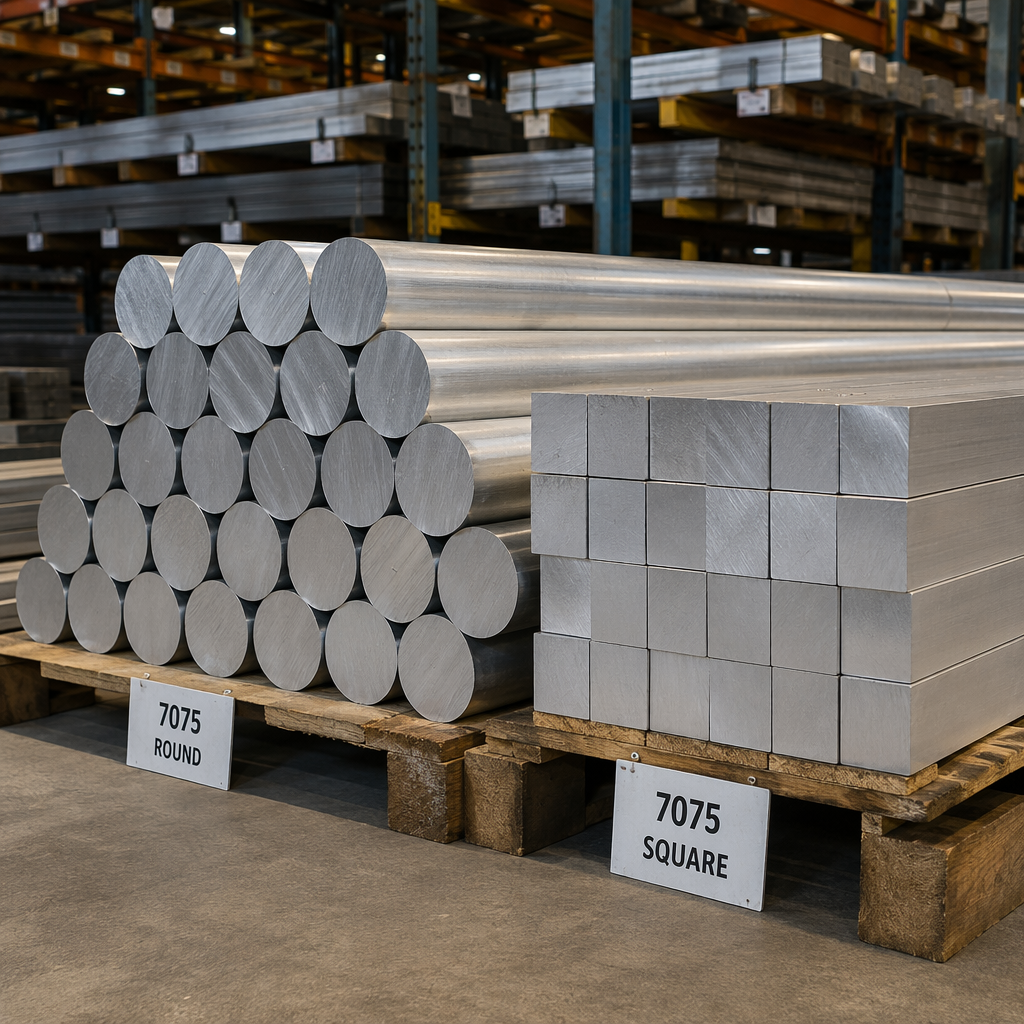
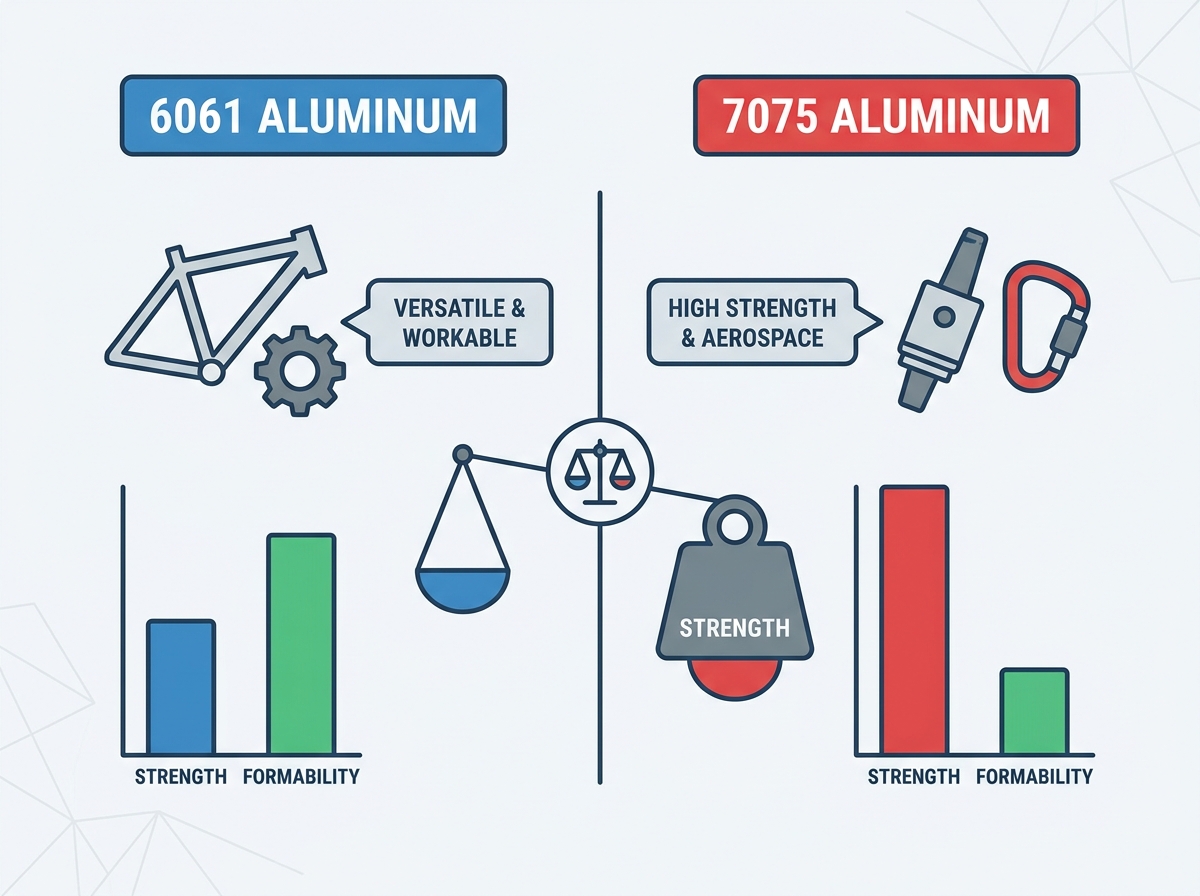
The strength disparity between these two materials is the primary driver for selection. 7075-T6 boasts a yield strength of approximately 503 MPa, whereas 6061-T6 offers roughly 276 MPa. Yield strength marks the exact point where the metal stops flexing elastically and begins to bend permanently. For load-bearing structures, exceeding this number means component failure. The ultimate tensile strength (UTS)—the absolute breaking point under tension—shows a similar gap. 7075-T6 reaches a UTS of 572 MPa, compared to 310 MPa for 6061-T6.
This 85% strength advantage fundamentally alters component design. Engineers utilizing 7075 can drastically reduce wall thicknesses, hollow out internal structures, and shrink the overall footprint of the part without sacrificing load capacity. This is why aerospace bulkheads and high-performance racing components rely on the 7000 series. To achieve the same load-bearing capacity with 6061, the part would require significantly more mass, negating the lightweight advantages inherent to Aluminum design.
Mechanical Property | 6061-T6 | 7075-T6 |
|---|---|---|
Yield Strength | 276 MPa | 503 MPa |
Ultimate Tensile Strength (UTS) | 310 MPa | 572 MPa |
Brinell Hardness | 95 HB | 150 HB |
Shear Strength | 207 MPa | 331 MPa |
Thermal Conductivity | 167 W/m-K | 130 W/m-K |
Fatigue Strength (500 million cycles) | 96.5 MPa | 159 MPa |
To properly evaluate mechanical properties for your specific application, follow these sequential engineering steps:
Calculate the maximum static load the component will bear during normal operation.
Determine the dynamic shock requirements and peak impact forces.
Assess the fatigue cycle lifespan required for moving or vibrating parts.
Map the thermal operating ranges to account for strength degradation at elevated temperatures.
Apply a safety factor multiplier based on industry standards and failure risk.
Surface hardness directly impacts wear resistance and durability. Measured on the Brinell scale, 7075-T6 achieves a hardness rating of 150 HB, significantly outpacing the 95 HB rating of 6061-T6. This superior hardness prevents surface galling, resists indentation from impacts, and extends the lifespan of components subjected to abrasive friction. Fatigue resistance is equally vital. Parts subjected to cyclic loading, such as automotive suspension control arms or aircraft wing spars, must endure millions of stress cycles without initiating microscopic cracks. 7075 offers superior fatigue strength, allowing it to survive high-frequency vibrations that would eventually fracture softer alloys.
Shear strength dictates performance in fastening applications. When components are joined using rivets, bolts, or threaded inserts, the material must resist the sliding forces attempting to slice through the metal. 7075 provides a shear strength of 331 MPa versus 207 MPa for 6061. This makes the 7000 series the definitive choice for heavily loaded threaded components, custom fasteners, and structural nodes where shearing forces are the primary failure vector.
Thermal dissipation characteristics often dictate material selection in electronics and automotive cooling. 6061 possesses superior thermal conductivity (167 W/m-K) compared to 7075 (130 W/m-K). This elevated ability to transfer heat makes the 6000 series the preferred choice for extruded heat sinks, liquid cooling plates, and heat exchangers. It efficiently draws thermal energy away from sensitive microprocessors or engine fluids, dissipating it into the surrounding environment.
Heat treatability is foundational to both alloys. The T6 temper is standard, but the T651 temper is frequently specified for precision machining. The T651 designation indicates the material has been stress-relieved by stretching it slightly after solution heat treatment. This stress relief is vital. When machining complex geometries from a solid block, internal residual stresses can cause the part to warp or bow as material is removed. Utilizing T651 tempered stock ensures dimensional stability during heavy CNC milling operations.
6061 is highly regarded in machine shops for its predictable behavior. It produces manageable chip formation, requires lower cutting forces, and easily holds tight tolerances using standard high-speed steel (HSS) or carbide tooling. However, it has a tendency to behave in a slightly gummy manner. If spindle speeds and feed rates are not optimized, or if coolant application is inadequate, 6061 can adhere to the cutting edge of the tool. This built-up edge (BUE) ruins the surface finish and can lead to tool breakage. Proper chip evacuation strategies, high rake angles, and polished flutes are necessary to maintain efficiency.
Conversely, machining 7075 introduces distinct challenges and rewards. The increased hardness demands higher cutting forces, which necessitates rigid workholding and robust machine tool architecture to prevent chatter. Tool wear accelerates, often requiring advanced carbide tooling with specialized coatings like Titanium Diboride (TiB2) to maintain production rates. Despite these challenges, 7075 machines beautifully. The brittleness of the alloy causes chips to break cleanly rather than forming long strings. It produces exceptionally clean, sharp threads and yields a vastly smoother, mirror-like surface finish directly off the endmill.
The 6000 series dominates welded structures. 6061 is the industry standard due to its excellent compatibility with both TIG (GTAW) and MIG (GMAW) processes. Welders typically utilize 4043 filler rod, which contains silicon to lower the melting temperature and increase weld pool fluidity. Alternatively, they use 5356 filler rod, which utilizes magnesium to maximize the ultimate strength of the joint. While the heat-affected zone will lose its T6 temper, dropping closer to the O-temper strength, the joint remains free of microscopic cracks and retains sufficient structural integrity for most industrial applications.
7075 is universally considered non-weldable for structural applications. The intense, localized heat of the welding arc causes the zinc and copper elements to segregate. This metallurgical disruption leads to severe hot cracking during solidification. Even if a weld appears visually sound, the internal micro-cracking and massive loss of tensile strength in the HAZ render the joint entirely unsafe for load-bearing use. Assemblies utilizing the 7000 series must be designed strictly for mechanical fastening, such as aerospace-grade rivets, structural bolts, or high-strength epoxy adhesives.
Cold workability varies drastically depending on the temper. In the fully annealed O-temper, both alloys can be bent, stamped, and formed. However, in the standard T6 temper, 6061 retains enough ductility to survive moderate bending operations without fracturing, provided the bend radius is generous. 7075-T6 is highly brittle. Attempting to bend it cold will almost certainly result in severe cracking along the bend line. Forming 7075 requires specialized hot forming techniques or forming in the O-temper followed by a complete post-forming heat treatment cycle.
Extrusion capabilities also separate the two materials. 6061 flows smoothly through steel dies under immense pressure, allowing manufacturers to create highly complex, multi-hollow, custom structural shapes. This makes it ideal for custom architectural framing or specialized heat sinks. 7075 resists the extrusion process due to its high strength and stiffness at elevated temperatures. Consequently, it is typically limited to standard geometric profiles, such as solid round bar, rectangular bar, sheet, and heavy plate stock.
The versatility of the 6000 series makes it the backbone of general manufacturing and structural engineering. It is the ideal material for complex extrusions used in architectural framing, automated conveyor systems, and modular T-slot framing. In the consumer sector, it is the standard alloy for high-end bicycle frames, offering a perfect blend of weldability, stiffness, and low weight.
The marine industry relies heavily on 6061 for boat hulls, dock structures, and marine hardware due to its inherent resistance to saltwater corrosion. Additionally, the automotive sector utilizes it for suspension components, chassis bracing, and heat exchangers where thermal conductivity and formability are paramount. You will also find it extensively in piping systems and pressure vessels where welded seams must remain leak-proof and structurally sound.
The 7000 series is reserved for applications where failure is not an option and weight reduction is critical. It is the definitive choice for high-stress structural components in the aerospace industry, including wing spars, fuselage bulkheads, and landing gear components. In the defense and sporting goods sectors, it is the standard material for AR-style firearm receivers, providing steel-like strength at a fraction of the weight.
High-stress mechanical assemblies, such as precision gears, shafts, and performance racing chassis parts, rely on its superior fatigue resistance. Furthermore, safety-critical climbing equipment, like load-bearing carabiners, utilizes this alloy to guarantee maximum tensile strength under extreme dynamic shock loads. Any application where the component must survive massive shearing forces or cyclic fatigue will benefit from the 7000 series.
Anodizing is the primary method for enhancing corrosion resistance and surface hardness. 6061 responds exceptionally well to both Type II (clear/color) and Type III (hardcoat) anodizing. The lack of heavy copper or zinc allows the anodic layer to build uniformly. When dyed, 6061 produces vibrant, consistent colors, making it highly desirable for consumer-facing products where aesthetics are just as important as protection. The resulting finish is smooth, protective, and visually flawless.
Anodizing 7075 presents distinct aesthetic challenges. The high concentrations of zinc and copper interfere with the anodizing process. Clear anodizing often results in a darker, yellowish, or slightly mottled appearance rather than a clean silver finish. Color dyes may appear muted or inconsistent. For lifecycle longevity, especially in harsh environments, 7075 requires Type III hardcoat anodizing. This thick, dense oxide layer provides essential corrosion protection and extreme wear resistance, though it typically renders the part dark gray or black, limiting cosmetic options.
A common engineering pitfall is specifying 7075 for non-critical components simply to guarantee maximum strength. This over-engineering drastically increases machining times, accelerates tool wear, and completely eliminates the possibility of welded assembly. Using the 7000 series for low-stress brackets, cosmetic panels, or lightly loaded fixtures is an inefficient use of manufacturing resources. It forces machinists to slow down feed rates and replace endmills more frequently for a part that will never see high stress.
To mitigate this risk, engineering teams must conduct rigorous Finite Element Analysis (FEA) during the design phase. By simulating the exact static and dynamic loads the component will face, designers can determine the actual safety factor required. In many cases, FEA reveals that 6061-T6 easily meets or exceeds the required safety margins. Pivoting to the 6000 series streamlines production, allows for welded sub-assemblies, and reduces machining bottlenecks.
Attempting to weld 7075 assemblies is a severe safety hazard. Inexperienced fabricators may attempt to TIG weld the material, assuming it behaves like standard structural alloys. While the weld bead may look acceptable on the surface, the heat cycle causes severe micro-cracking and destroys the T6 temper in the heat-affected zone. Under operational loads, this compromised joint will suffer catastrophic failure, tearing apart at stresses far below the material's rated capacity.
Mitigation requires strict design protocols. If the 7000 series is mandated for its tensile strength, the assembly must be designed exclusively for mechanical fasteners. Utilize aerospace-grade blind rivets, structural bolts, or high-strength epoxy adhesives. If the design absolutely requires welded joints for fluid sealing or geometric constraints, the engineering team must pivot back to 6061 and redesign the wall thicknesses to accommodate the lower yield strength.
Deploying bare 7075 in marine, high-moisture, or chemically active environments invites rapid degradation. The copper content within the alloy creates internal galvanic cells when exposed to an electrolyte like saltwater. This leads to severe pitting corrosion, which acts as stress concentrators that initiate fatigue cracks. Over time, the structural integrity of the component is entirely hollowed out by this localized corrosion.
To mitigate environmental risks, bare 7075 should never be exposed to corrosive elements. Mandate the use of Alclad material, which features a thin layer of high-purity, corrosion-resistant aluminum metallurgically bonded to the core alloy. Alternatively, specify chromate conversion coatings (Chem Film) or thick Type III hardcoat anodizing to seal the surface. If maintaining these coatings is impractical for the application, specify 6061, which offers vastly superior inherent corrosion resistance.
Optimizing your material selection requires aligning mechanical demands with fabrication realities. Follow these actionable steps to finalize your engineering specifications:
Run comprehensive Finite Element Analysis (FEA) on your CAD models to determine if the 503 MPa yield strength of 7075 is mathematically required for your safety factor.
Audit your manufacturing floor capabilities; if your assembly relies on TIG or MIG welding, immediately restrict your selection to the 6000 series.
Specify environmental coatings based on deployment location, mandating hardcoat anodizing or Alclad for any 7000 series parts exposed to moisture.
Prototype complex geometries with 6061 first to validate tool paths and workholding before committing to the higher machining forces required by harder alloys.
A: No. While 6061 is highly weldable, the 7075 alloy contains high levels of zinc and copper. Applying welding heat causes these elements to segregate, leading to severe hot cracking and a massive loss of strength in the heat-affected zone. You must use mechanical fasteners to join these two materials.
A: 7075 has a significantly higher Brinell hardness (150 HB) compared to 6061 (95 HB). This increased hardness requires higher cutting forces and generates more friction at the cutting edge, accelerating tool wear. Machinists often must switch to specialized coated carbide tooling to maintain efficient production rates.
A: Yes, it is frequently used in aerospace for non-critical structural components, interior fittings, and complex extruded shapes. However, for primary load-bearing structures like wing spars or bulkheads, 7075 is preferred due to its vastly superior tensile and yield strength.
A: Yes, Type III hardcoat anodizing can slightly reduce the fatigue life of both alloys. The dense oxide layer is brittle and can initiate microscopic surface cracks under cyclic loading. Engineers must account for this slight reduction in fatigue strength when designing dynamically loaded components.
A: 6061 is vastly superior for marine environments. It lacks the heavy copper content found in 7075, making it highly resistant to saltwater corrosion and galvanic pitting. 7075 will corrode rapidly in marine conditions unless heavily protected by cladding or thick hardcoat anodizing.
A: Yes. Welding 6061-T6 destroys the temper in the heat-affected zone, dropping its strength. However, the entire welded assembly can be subjected to a full post-weld heat treatment (solution heat treating and artificial aging) to restore the T6 properties across the entire structure.


