
English 
Room501, Building32, No. 518 Xinzhuan Highway, Songjiang District, Shanghai, China 201612
Views: 0 Author: Site Editor Publish Time: 2026-09-09 Origin: Site


Material selection acts as a critical failure point in manufacturing. Choosing the wrong alloy leads directly to structural failure, excessive tooling wear, or premature corrosion in the field. Engineers constantly face a strict trade-off between structural rigidity and manufacturing flexibility when evaluating non-ferrous metals. You need high yield strength for load-bearing frames. However, you also need high formability for complex paneling and enclosures. Balancing these conflicting requirements dictates the success and longevity of your entire production run.
This guide provides an evidence-based, side-by-side technical evaluation of 5052 and 6061 aluminum. We skip the theoretical fluff and focus on how these materials behave under real-world machining, welding, and bending operations. You will see exactly where each grade excels and where it fails. Understanding these precise metallurgical differences drives accurate procurement and engineering decisions on the shop floor.
Strength vs. Formability: 6061 aluminum delivers superior tensile and yield strength (ideal for structural components), whereas 5052 prioritizes high formability and tight bend radii without cracking.
Environmental Durability: 5052 offers superior inherent corrosion resistance, particularly in saltwater and marine environments, without requiring additional surface treatments.
Machining vs. Welding: 6061 is the industry standard for CNC machining due to its chip formation and hardness, while 5052 provides superior weldability and sheet metal workability.
Cost Implications: 5052 is generally recognized for its affordability in high-volume sheet metal fabrication, while 6061 carries a slight premium justified by its heat-treatable properties and structural load capacity.
Table of Contents
Defining success criteria for an industrial alloy requires looking beyond basic material data sheets. What makes an alloy suitable for a specific application depends heavily on its alloying elements, available temper designations, and baseline physical properties. These chemical compositions directly dictate how the metal behaves under stress, heat, and cutting tools. We must examine the exact metallurgical makeup to understand why these two grades perform so differently on the shop floor.
The 5052 alloy relies on magnesium as its primary alloying element, typically containing between 2.2% and 2.8% magnesium by weight. This specific chemical composition significantly increases the material's baseline strength through solid solution strengthening and work hardening. Unlike aerospace grades in the 7xxx series, 5052 remains strictly non-heat-treatable. You cannot alter its mechanical properties through thermal cycling or artificial aging. Instead, manufacturers strengthen the material through cold working processes like rolling, drawing, or stamping.
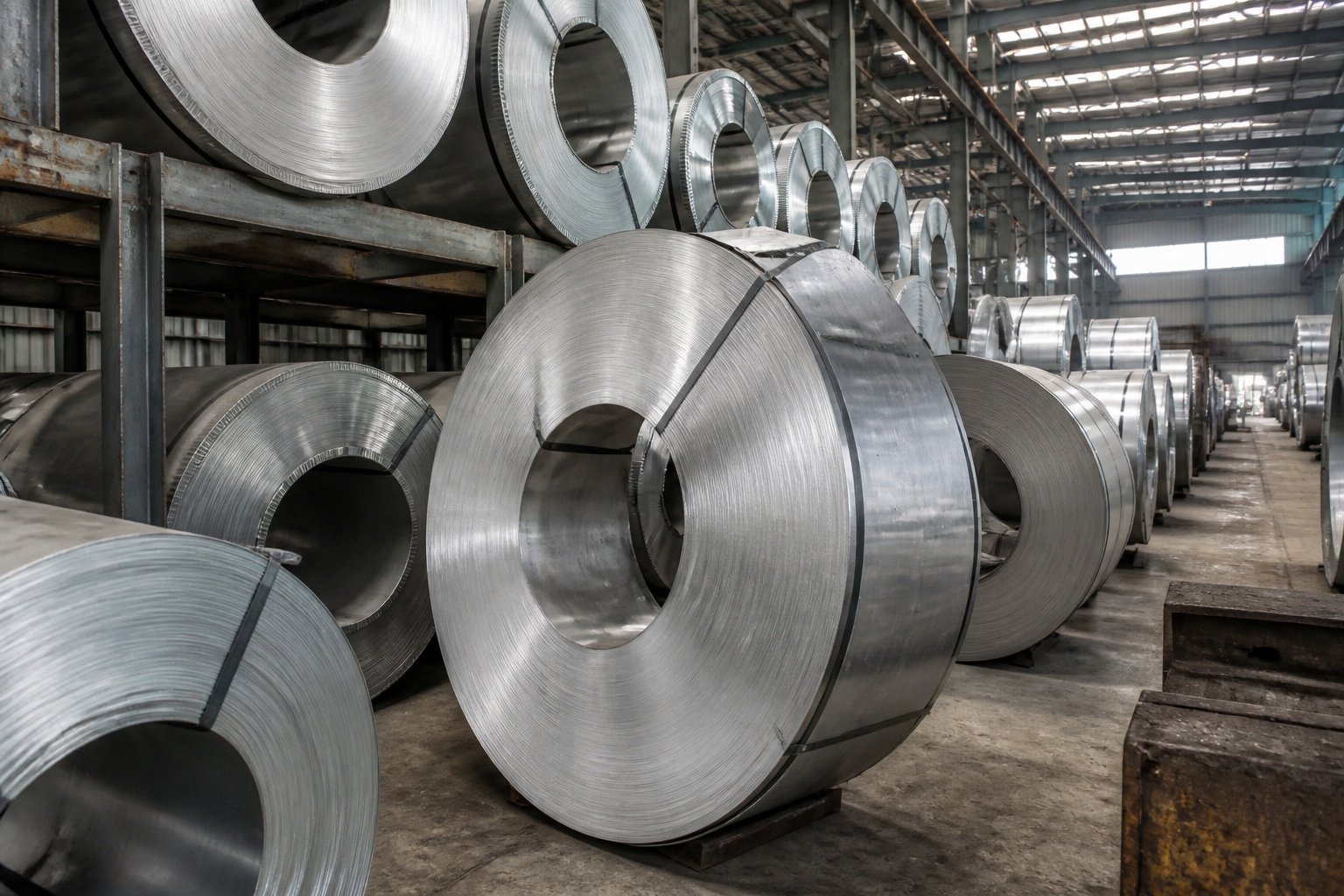
You will most commonly encounter this Aluminum grade in the H32 temper on the shop floor. The H32 designation indicates the metal is strain-hardened and then thermally stabilized to a quarter-hard state. This specific processing prevents the alloy from softening over time at room temperature, ensuring consistent mechanical properties during long-term storage. Engineers primarily classify 5052 as a highly workable sheet metal. It serves as the undisputed standard for marine-grade applications due to its exceptional resistance to saltwater degradation and general atmospheric wear.
The 6061 alloy utilizes both magnesium (around 1.0%) and silicon (around 0.6%) as its primary alloying elements. Together, these elements form magnesium silicide, which unlocks the material's ability to undergo precipitation hardening. This heat-treatable nature completely transforms how engineers apply the metal in structural designs. By subjecting the material to specific heating and cooling cycles, manufacturers drastically increase its yield strength and overall load-bearing capabilities.
You will typically source 6061 Aluminum in the T6 or T4 tempers. The T6 temper involves solution heat treating followed by artificial aging in a controlled oven. This process maximizes the alloy's structural integrity, making it highly rigid. The T4 temper skips the artificial aging step, offering slightly better formability while retaining good baseline strength. Industry professionals classify 6061 primarily as a structural and machining-grade material, perfect for rigid frames, custom extrusions, and precision-milled components.
Comparing raw mechanical data determines load-bearing capabilities and overall structural integrity. The numbers dictate how a component will perform under physical stress in real-world engineering applications. We rely on these specific metrics to calculate safety factors and prevent catastrophic failures in the field.
Property | 5052-H32 Aluminum | 6061-T6 Aluminum |
|---|---|---|
Yield Strength | 193 MPa (28,000 psi) | 276 MPa (40,000 psi) |
Ultimate Tensile Strength | 228 MPa (33,000 psi) | 310 MPa (45,000 psi) |
Shear Strength | 138 MPa (20,000 psi) | 207 MPa (30,000 psi) |
Brinell Hardness | 60 | 95 |
Modulus of Elasticity | 70.3 GPa (10,200 ksi) | 68.9 GPa (10,000 ksi) |
Yield strength represents the exact point where a material bends permanently and will not return to its original shape. This metric matters more than ultimate tensile strength for most structural designs, because once a frame yields, the component has failed its engineering purpose. Contrast the yield strength of 6061-T6 (approximately 276 MPa or 40,000 psi) directly against 5052-H32 (approximately 193 MPa or 28,000 psi). The 6061 alloy handles significantly more stress before permanent plastic deformation occurs.
These metrics translate directly to real-world applications. You specify 6061 for rigid framing, structural supports, and heavy-duty brackets where maintaining dimensional stability under heavy static loads is non-negotiable. Conversely, you use 5052 for flexible paneling, fuel tanks, and enclosures where the material must absorb minor impacts and flex slightly without fracturing.
Shear strength measures a material's resistance to forces that cause its internal layers to slide past one another. The shear strength of 6061 sits at 207 MPa (30,000 psi), while 5052 maxes out around 138 MPa (20,000 psi). This massive difference makes 6061 vastly superior for tapped holes, threaded fasteners, and load-bearing pins. If you tap a thread into 5052, it will strip out under much lower torque compared to the same thread tapped into 6061.
Evaluate the Brinell hardness ratings similarly. The 6061-T6 alloy scores approximately 95, whereas 5052-H32 scores around 60. This higher hardness rating gives 6061 better wear resistance in dynamic environments. It resists surface scratching, gouging, and abrasive wear much better than the softer 5052 alloy, making it suitable for sliding mechanisms and contact surfaces.
Engineers often harbor a misconception regarding material stiffness. Many assume that because 6061 is stronger, it must also be stiffer. This is factually incorrect. Both alloys share a nearly identical Modulus of Elasticity, hovering around 70 GPa (10,000 ksi). Young's Modulus dictates how much a material deflects under a given elastic load before reaching its yield point.
If you apply an identical, non-permanent load to a 5052 beam and a 6061 beam of the exact same dimensions, they will deflect by the exact same amount. The critical difference lies in the yield point. The 6061 beam will continue to deflect elastically under much heavier loads and spring back to flat, whereas the 5052 beam will permanently bend much sooner under that same increasing load.
Fatigue resistance dictates how an alloy handles cyclic loading and continuous vibration over time. Despite its lower overall yield strength, 5052 exhibits excellent fatigue strength. It endures millions of flex cycles without initiating micro-cracks along the grain boundaries. This characteristic makes it highly valuable for automotive body panels, fuel tanks, and transportation enclosures subjected to constant road vibration.
While 6061 also performs well under cyclic loading, its higher rigidity leads to stress concentrations if not designed with proper radiused corners. You must carefully calculate fatigue limits and avoid sharp internal corners when using 6061 in high-vibration aerospace or automotive suspension components to prevent premature crack propagation.

Assessing behavioral characteristics in specialized environments requires looking beyond mechanical strength. Heat dissipation and electrical conductivity play massive roles in electronics manufacturing, power distribution, and thermal management systems. Choosing the wrong alloy here leads to overheating components or inefficient power transmission.
Thermal conductivity measures how efficiently a material transfers heat away from a source. The 6061 alloy boasts a thermal conductivity of approximately 167 W/m-K. In contrast, 5052 offers a lower thermal conductivity of roughly 138 W/m-K. This measurable difference impacts component design in high-temperature environments where rapid heat dissipation prevents electronic failure.
Engineers frequently specify 6061 for extruded heat sinks, cooling fins, and thermal management enclosures. The material pulls heat away from sensitive electronic components faster and more efficiently than 5052. When designing high-output LED housings, computer chassis parts, or pneumatic manifolds, 6061 provides a clear, measurable thermal advantage.
Electrical conductivity is measured against the International Annealed Copper Standard (IACS). The 6061 alloy generally exhibits an electrical conductivity of about 43% IACS. The 5052 alloy sits slightly lower, typically around 35% IACS. Both metals conduct electricity well enough for general industrial use, but 6061 holds a slight edge in efficiency.
These implications matter for electrical enclosures, busbars, and grounding applications. While neither alloy replaces pure copper for high-voltage transmission lines, 6061 serves as an excellent, lightweight alternative for structural grounding points and conductive chassis frames in telecommunications equipment where weight reduction is necessary.
Material behavior on the shop floor directly impacts your manufacturing time, tooling costs, and overall production throughput. An alloy that looks perfect on a data sheet will destroy your profit margins if it is impossible to machine, bend, or weld efficiently. We must evaluate how these metals interact with cutting tools and press brakes.
Machinists widely consider 6061 the preferred choice for CNC milling and turning operations. Its T6 temper provides a crisp, predictable chip-breaking characteristic. The material clears out of the cutting zone easily, preventing tool clogging and recutting of chips. You achieve excellent surface finishes with standard uncoated carbide tooling, high spindle speeds, aggressive feed rates, and minimal tool wear.
Machining 5052 presents significant challenges on the mill and lathe. The material possesses a soft, gummy texture. Instead of breaking into neat chips, 5052 produces long, continuous stringers that wrap around endmills and drill bits. It frequently causes built-up edge (BUE) on cutting tools, where the aluminum literally friction-welds itself to the carbide insert. Machining 5052 requires highly polished flutes, extreme rake angles, and aggressive high-pressure coolant strategies to maintain a decent surface finish and prevent tool breakage.
When it comes to sheet metal forming, stamping, and deep drawing, 5052 dominates the shop floor. Its high elongation properties allow it to stretch and deform without fracturing. You achieve tight bend radii—often equal to the material thickness (1t)—without experiencing cracking along the outside of the bend line. It behaves predictably in a press brake, offering consistent springback values.
Bending 6061-T6 carries massive cracking risks. The artificial aging process makes the outer fibers of the material highly brittle under tension. If you attempt a tight 90-degree bend on 6061-T6, it will almost certainly fracture along the grain. To form 6061 successfully, you must either use a very large bend radius (often 3t to 5t) or bend the material in its annealed (O) state before sending it out for heat treatment, which adds time and expense to the project.
Both alloys offer good weldability using standard TIG and MIG processes, but they behave entirely differently post-weld. You typically weld 5052 using ER5356 filler rod. Because 5052 relies on work hardening rather than heat treatment, the heat-affected zone (HAZ) loses some strength, but the overall joint retains excellent mechanical properties and resists stress corrosion cracking.
Welding 6061 requires careful thermal consideration. You generally use ER4043 or ER5356 filler metal depending on the required joint strength and post-weld anodizing plans. However, the intense heat of the welding arc destroys the T6 temper in the heat-affected zone. The welded area reverts to a much weaker state, closer to the O temper. To restore the structural integrity of a welded 6061 assembly, you must subject the entire finished part to a complete post-weld heat treatment cycle.
Modern manufacturing relies heavily on industrial fiber and CO2 laser cutters for flat pattern profiling. Both 5052 and 6061 reflect laser light, requiring high power densities and high-pressure nitrogen assist gas to initiate a clean cut. However, their differing thermal conductivities impact maximum cutting speeds.
Because 5052 has slightly lower thermal conductivity, the heat from the laser stays concentrated at the cut zone rather than dissipating rapidly into the surrounding sheet. This localized heat retention allows for marginally faster cutting speeds in sheet formats compared to 6061. The difference is minor on a single part but adds up significantly over a production run of thousands of nested components.
Long-term survivability in harsh operating environments dictates the lifespan of your product. You must analyze how each alloy resists corrosion and how well it accepts aesthetic and protective surface finishes. Bare aluminum forms a natural oxide layer, but the alloying elements change how robust that layer is.
The 5052 alloy offers superior, inherent resistance to saltwater and industrial chemical environments. The high magnesium content creates a robust oxide layer that repairs itself rapidly when scratched. This makes 5052 the undisputed standard for marine applications, boat hulls, and offshore enclosures. It survives for decades in heavy salt spray without requiring paint, powder coating, or protective chemical films.
While 6061 provides excellent baseline corrosion resistance for general outdoor use, it falls short of 5052 in extreme environments. The addition of silicon makes 6061 vulnerable to galvanic corrosion and pitting in highly alkaline or saline environments. If you deploy bare 6061 in a marine setting or expose it to road salts, it will pit, oxidize, and degrade much faster than 5052.
Anodizing artificially thickens the natural oxide layer, providing extreme wear resistance, electrical insulation, and color options. Both alloys respond well to Type II (sulfuric) and Type III (hardcoat) anodizing, but their aesthetic results differ significantly on the finishing line.
The 6061 alloy provides an excellent response to clear and color anodizing. The surface finishes bright, smooth, and takes dyes evenly across the entire part. It is the go-to choice for consumer electronics, cosmetic automotive parts, and high-end sporting goods. The 5052 alloy also anodizes well for mechanical protection, but its higher magnesium content causes a slightly cloudy or yellowish tint when clear anodized. Color consistency on 5052 is harder to control across different material batches, making it less ideal for purely cosmetic applications.
Evaluating value requires breaking down the overall project expenses beyond raw material rates. You must account for processing times, tooling consumption, scrap rates, and material availability across different form factors.
Baseline market prices fluctuate based on global supply, but 5052 generally maintains a reputation for affordability, especially in large-scale sheet metal projects. Because it bypasses complex heat treatment cycles at the mill, the raw production cost remains lower. The 6061 alloy carries a slight premium. The multi-step solution heat treating and artificial aging processes required to achieve the T6 temper add directly to the material's baseline cost at the mill.
The true financial impact often hides in manufacturing and processing costs on the shop floor. When machining 5052, you face hidden expenses through accelerated tooling wear, slower feed rates, and increased machine downtime for chip clearing. Conversely, when fabricating 6061, you face hidden expenses through post-weld heat treatments or high scrap rates caused by press brake bending fractures.
Standard commercial availability dictates lead times and inventory management. You will predominantly source 5052 as sheet, coil, and plate. It is rarely extruded into complex shapes because it does not flow as well through extrusion dies. In contrast, 6061 is universally available in almost every conceivable form factor. You easily procure 6061 in sheet, plate, round bar, square tube, and highly complex custom extrusions, making it incredibly versatile for supply chain consolidation.
Mapping technical specifications to specific industry use cases eliminates guesswork. Use this framework to align material properties with your exact engineering requirements and shop floor capabilities.
Marine components, including boat hulls, docks, and offshore electrical enclosures exposed to salt spray.
Automotive body panels, fuel tanks, and lightweight transportation enclosures requiring high vibration resistance.
Complex sheet metal assemblies requiring tight bend radii, deep drawing, and high formability without cracking.
Architectural paneling and signage where structural loads are minimal but environmental exposure is high.
Structural framing, robotic chassis, and automation equipment requiring high yield strength and rigidity.
Aerospace components, drone frames, and high-stress mounting brackets.
Precision CNC machined parts requiring tight tolerances, threaded holes, and excellent surface finishes.
Custom extruded profiles for heat sinks, pneumatic manifolds, and fluid routing systems.
Heavy-duty brackets and fixtures that require high shear strength for mechanical fasteners.
Audit your shop floor capabilities to determine if your primary manufacturing process relies on heavy CNC milling (favoring 6061) or complex press brake bending (favoring 5052).
Define the environmental exposure of the final product to see if it requires the inherent saltwater resistance of 5052 or if the baseline protection of 6061 is sufficient.
Calculate the required yield strength for the maximum expected load to ensure the chosen alloy will not permanently deform under stress.
Consult with your material supplier regarding the availability of specific extrusions, sheet thicknesses, and temper designations to avoid long lead times.
A: Yes, you can successfully weld 5052 and 6061 together using standard TIG or MIG processes. We recommend using ER5356 filler metal for this dissimilar joint. It provides excellent strength and a good color match after anodizing. Keep in mind that the heat-affected zone on the 6061 side will lose its T6 temper and weaken significantly.
A: Aluminum does not rust because it contains no iron. However, 6061 corrodes and pits in harsh outdoor environments, especially near saltwater or road chemicals. It forms a protective oxide layer naturally, but for long-term outdoor durability, we recommend anodizing or powder coating the surface.
A: The 6061-T6 alloy cracks during bending because the artificial aging process makes the material hard and brittle under tension. To prevent cracking, you must use a much larger bend radius, typically 3 to 5 times the material thickness, or bend the material in its soft, annealed state.
A: You can machine 5052, but it is not ideal. Its soft, gummy nature causes it to produce long, stringy chips that wrap around tooling. It also causes built-up edge on cutters. If you must machine 5052, use highly polished, sharp carbide tools with aggressive high-pressure coolant flow.
A: Both alloys take protective hardcoat anodizing very well. However, 6061 is superior for cosmetic clear and color anodizing. It provides a brighter, more consistent finish. The higher magnesium content in 5052 causes a slightly cloudy or yellowish appearance when clear anodized.
A: No, 5052 is a strictly non-heat-treatable alloy. You cannot increase its yield strength through thermal cycling or artificial aging. The only way to strengthen 5052 is through cold working processes, such as rolling or drawing, which strain-hardens the material.


